

Batik Air Recognised by Asia Record as Best Full Service Airline in 2025

KUALA LUMPUR, Malaysia – Batik Air Malaysia has been officially recognised by Asia Record as the “Best Full Service Airline in 2025,” marking a significant milestone for the Malaysian carrier as it continues expanding its network and strengthening the passenger experience.
The recognition highlights an airline proposition that has become increasingly distinctive in today’s highly competitive aviation market: combining connectivity with service, comfort and choice.
Led by CEO Datuk Chandran Rama Muthy, Batik Air has continued developing its domestic and international network, while Yogananthan Muniandy, a senior leader in the airline’s commercial division, has played a role in strengthening its commercial strategy and market connectivity.
Travellers can explore destinations, schedules and travel services through the official Batik Air Malaysia website.
What Does Full Service Mean to Today’s Traveller?
The aviation industry has changed dramatically.
Passengers today have more choices than ever, from low-cost carriers focused on basic transportation to premium airlines offering increasingly sophisticated travel experiences.
For a full service airline, the challenge is finding the right balance.
Passengers still care about price, but they also consider schedules, baggage, seating, connections, onboard experience and the overall convenience of travelling from one destination to another.
This means the airline experience begins long before passengers board the aircraft.
It starts when they search for a flight and continues through booking, check-in, baggage handling, airport experience, boarding, inflight service and arrival.
Every stage becomes part of how passengers perceive the airline.
For Batik Air, competing as a full service carrier means bringing those different elements together into a more complete travel proposition.
From Malindo Air to Batik Air
Batik Air Malaysia’s journey has evolved significantly over the years.
The airline began operations under the Malindo Air identity before transitioning to the Batik Air brand.
That evolution represented more than a change of name.
It brought the Malaysian operation under a more unified Batik Air identity while the airline continued developing its network and positioning within the regional aviation market.
Today, Batik Air connects Malaysia with destinations across multiple international markets while maintaining important domestic connections.
Its continued expansion demonstrates the strategic importance of connectivity in building an airline brand.
For passengers, a larger network means more travel possibilities.
For Malaysia, it also means stronger links between Kuala Lumpur and important tourism and business markets.
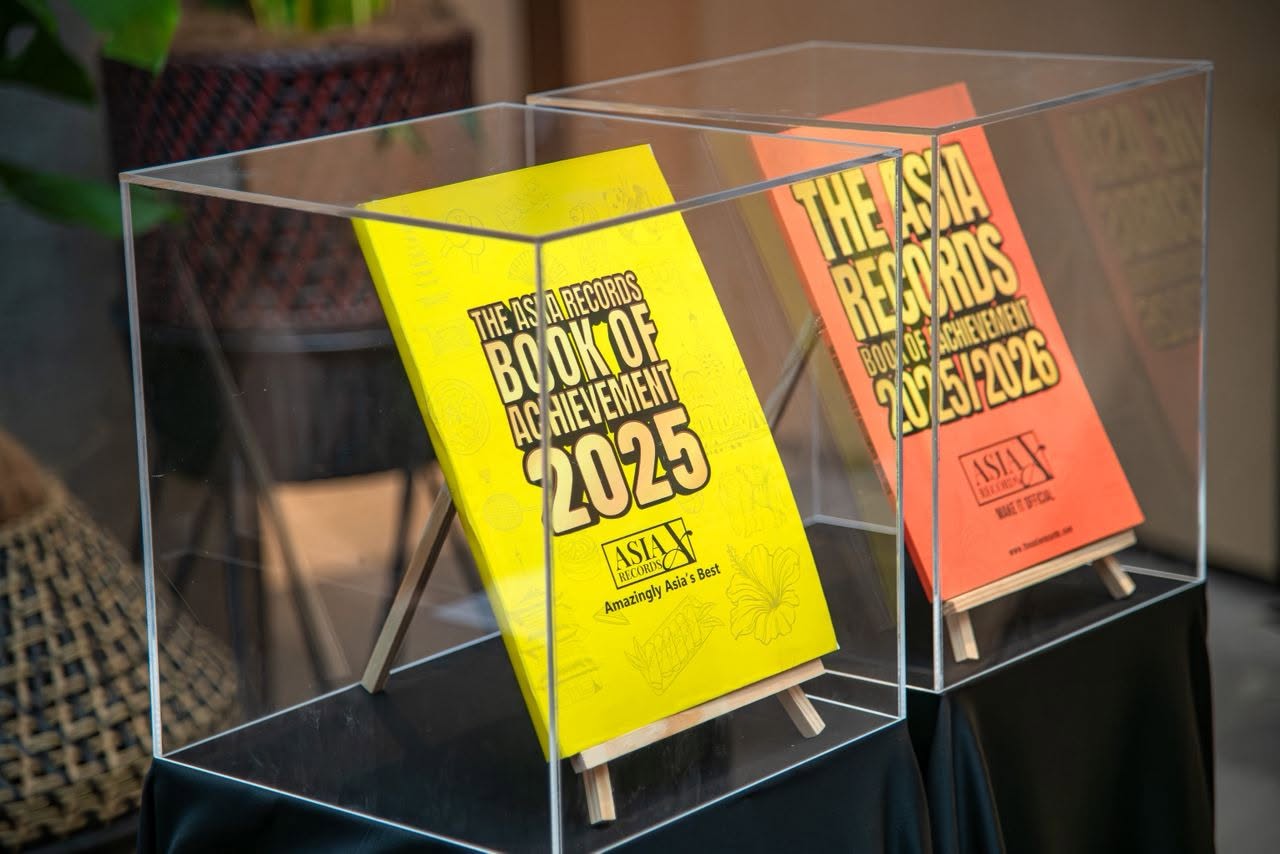
Batik Air Recognised by Asia Record
Batik Air’s development and service proposition resulted in the airline being officially recognised by Asia Record as the “Best Full Service Airline in 2025.”
The recognition represents an important milestone for the airline and its employees.
Batik Air has also publicly celebrated the achievement, describing it as recognition of the airline’s continued commitment across service, comfort, operational reliability, innovation and safety.
It is also featured in the Asia Record Book of Achievements 2025/2026, adding the airline to the wider collection of organisations and achievements documented through Asia Record.
The recognition reflects the collective contribution of the people behind the airline — from flight and cabin crews to ground operations, engineering, customer service, commercial teams and other employees who contribute to the passenger journey.
Representing the commercial leadership of Batik Air, Yogananthan Muniandy said:
“We are honoured to be recognised by Asia Record as the best full service airline. This achievement reflects our unwavering commitment to providing outstanding service and a seamless travel experience. We will continue to enhance our offerings and exceed our passengers’ expectations.”
Connectivity Is at the Heart of an Airline
Airlines ultimately exist to connect.
They connect families.
They connect tourists with destinations.
They connect companies with customers and markets.
And they connect cities with the wider global economy.
For Batik Air, network development has therefore become an important part of its growth strategy.
The airline has continued adding and strengthening domestic and international connections, helping travellers use Kuala Lumpur and other Malaysian airports as gateways to a wider range of destinations.
Its network now connects Malaysia with markets across Asia and beyond, supporting both leisure and business travel.
That connectivity is particularly important as Malaysia strengthens its position as a regional tourism and aviation destination.
Strengthening Kuala Lumpur as a Regional Gateway
Malaysia’s geographical position gives it a natural advantage within Asian aviation.
Kuala Lumpur sits within relatively easy flying distance of major Southeast Asian capitals while also connecting conveniently with South Asia, East Asia and other international markets.
Airlines capable of building strong networks through Malaysia can therefore contribute to the country’s role as a regional aviation hub.
Batik Air’s expansion supports that opportunity.
The airline has said its growing network now connects more than 20 countries, strengthening Kuala Lumpur’s role as a gateway for leisure and business travellers.
The impact extends beyond aviation itself.
More air connectivity can support tourism, hotels, restaurants, events, retail and business travel.
An airline route is therefore not simply a connection between two airports.
It can become an economic connection between two markets.
Bringing International Flights Back to Subang
One particularly interesting part of Batik Air’s recent network development has been its expansion from Sultan Abdul Aziz Shah Airport in Subang.
In July 2025, Batik Air launched a direct service between Bangkok’s Don Mueang International Airport and Subang Airport, marking its first international service from Subang.
Tourism Malaysia described the route as an important step in strengthening air connectivity between Malaysia and Thailand ahead of Visit Malaysia 2026.
Batik Air also launched its Subang–Kuching service during the same period, expanding domestic connectivity from the city airport.
For passengers based around the Klang Valley, Subang can offer a different airport proposition from Kuala Lumpur International Airport.
The expansion therefore gives Batik Air another way to compete — not simply through destination choice, but through airport convenience.
The Passenger Experience Is Made Up of Details
Airline service is unusual because the customer experience involves so many separate interactions.
A passenger might remember the comfort of the seat.
Another may remember how efficiently a problem was handled.
A business traveller might value the flight schedule.
A family might prioritise baggage and convenience.
Someone connecting between flights may care most about reliability.
No single feature defines the entire experience.
This is why consistency becomes so important for airlines.
Aircraft and destinations attract customers, but the thousands of operational details surrounding each journey influence whether passengers choose the airline again.
For a full service carrier, this creates both an opportunity and a responsibility.
The airline must compete not only on where it flies, but on how passengers feel throughout the journey.
Safety Remains the Foundation
Behind every discussion of airline comfort, service and convenience is something more fundamental: safety.
Batik Air itself emphasised this point when announcing its Asia Record recognition, stating that safety remains its highest priority.
This distinction matters.
Premium service can enhance a passenger’s journey, but aviation depends first on disciplined operations, maintenance, trained personnel and adherence to regulatory requirements.
The strongest airline brands therefore need to balance the visible elements passengers experience with the operational systems passengers rarely see.
Service Still Matters in a Price-Driven Industry
Air travel has become increasingly price transparent.
Passengers can compare fares across multiple airlines within seconds.
That environment creates enormous pressure on carriers to remain competitive.
But price is not always the only deciding factor.
A traveller may be willing to choose a different fare because of a more convenient departure time, baggage requirements, seating preference, connection or overall travel experience.
This creates room for full service airlines to differentiate themselves.
The objective is not necessarily to be the cheapest option on every route.
It is to give passengers enough overall value to justify choosing the airline.
That value can come from a combination of network, schedule, service, comfort and convenience.
The People Behind Every Flight
An aircraft may be the most visible symbol of an airline, but aviation is ultimately a people-intensive industry.
Every flight depends on teams working across multiple functions.
Pilots and cabin crew are the people passengers see most often.
Behind them are engineers, dispatchers, ground handlers, airport teams, commercial planners, customer service personnel, operations teams and many others.
A single flight therefore represents the coordinated work of a much larger organisation.
Batik Air’s Asia Record recognition is consequently not only about the brand displayed on the aircraft.
It also reflects the people responsible for delivering the operation every day.
Preparing for the Next Era of Travel
Passenger expectations will continue to evolve.
Travellers increasingly expect digital convenience before and after a flight.
They want easier booking, clearer information, flexible options and more seamless journeys.
At the same time, airlines must navigate fuel costs, aircraft availability, economic uncertainty, sustainability pressures and intense competition.
That makes aviation one of the most complex consumer industries in which to operate.
The airlines that succeed will need to continuously improve both sides of the equation: operational discipline behind the scenes and customer experience in front of the passenger.
Continuing the Batik Air Journey
The Asia Record recognition as Best Full Service Airline in 2025 provides Batik Air with another milestone as it continues building its presence within Malaysia and the wider international aviation market.
But an airline’s reputation is never determined by one year alone.
It is rebuilt every day.
Every departure, every arrival and every interaction with a passenger contributes to how the brand is perceived.
For Batik Air, continued network expansion provides new opportunities to connect Malaysia with the world.
The challenge is to ensure that service and passenger experience develop alongside that growth.
As Malaysia prepares to welcome more international visitors and strengthen its position as a regional tourism and business destination, airlines such as Batik Air will play an increasingly important role in making those connections possible.
And ultimately, that is what aviation is about.
Connecting people with the places they need — and want — to be.
Travellers can discover Batik Air’s latest destinations, schedules and travel services through the official Batik Air Malaysia website.
For more information about this recognition and other remarkable achievements across Asia, visit AsiaRecord.com.
OFFICIAL ASIA RECORD https://asiarecord.com/
ABOUT OFFICIAL ASIA RECORD HISTORY https://asiarecord.com/about/
OFFICIAL ASIA RECORD Nomination Process: https://asiarecord.com/application/
GET OFFICIAL ASIA RECORD https://asiarecord.com/faq/
FIND OFFICIAL ASIA RECORD https://asiarecord.com/contact-page/
Digital Business
Companies with strong digital platforms can scale faster and reach new customers more efficiently.
Sustainable Growth
Responsible business practices help brands build credibility with investors and consumers.