
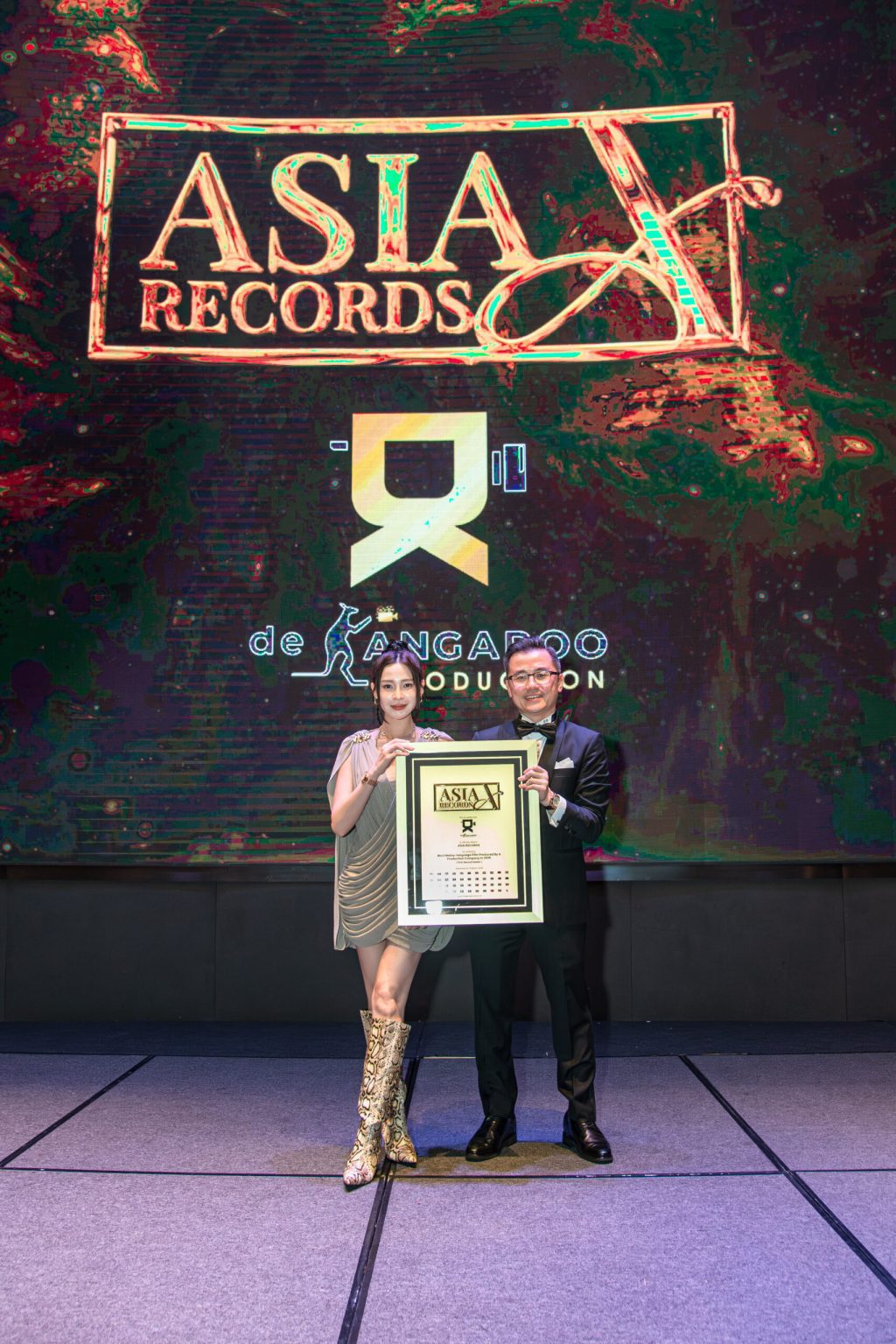
De-Kangaroo Recognised by Asia Record for Producing the Most Malay-Language Films by a Production Company in 2025
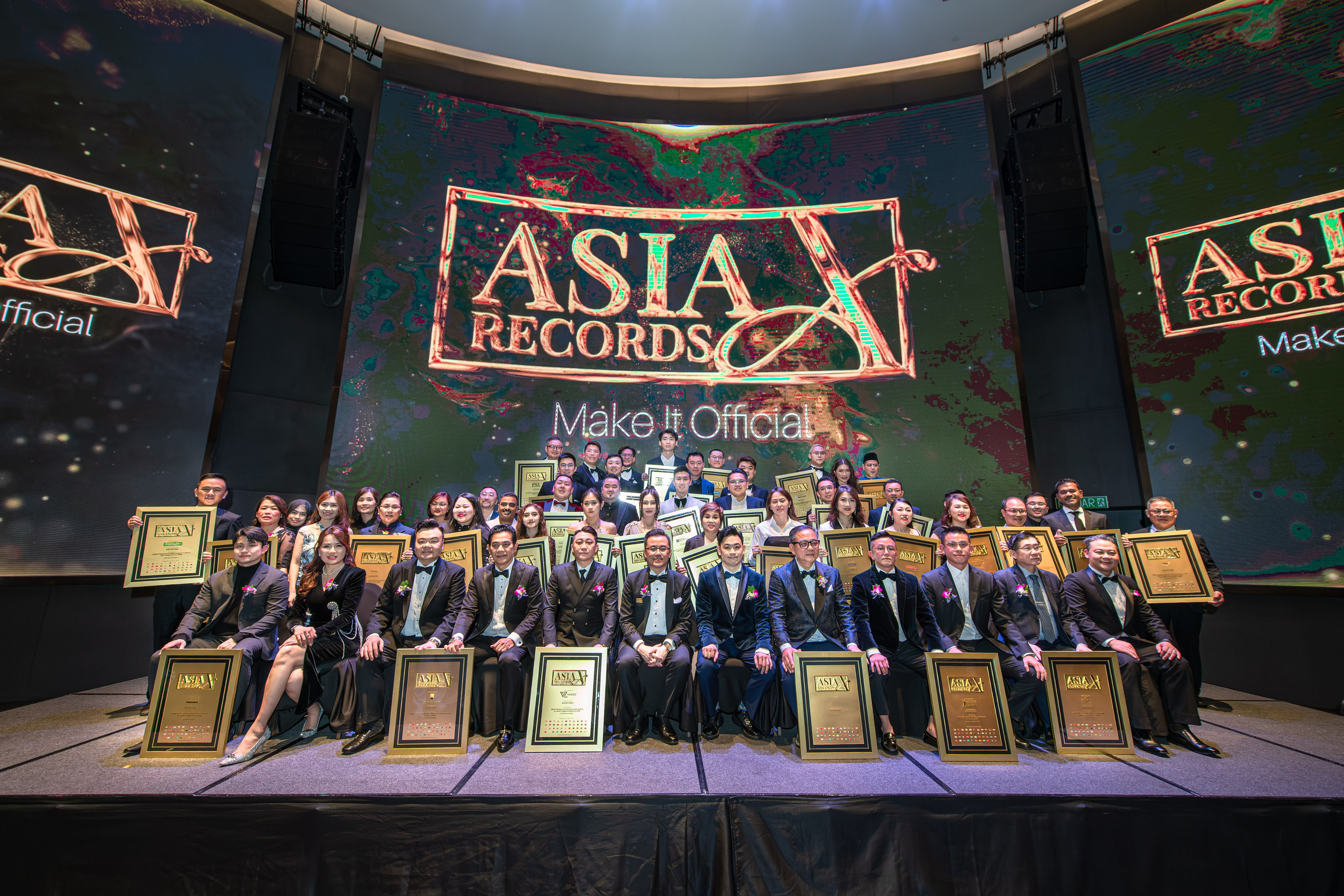
KUALA LUMPUR, Malaysia – Malaysian film production company De-Kangaroo Production has been officially recognised by Asia Record for achieving the “Most Malay-Language Films Produced by a Production Company in 2025,” highlighting its contribution to Malaysia’s evolving film and entertainment industry.
Founded by Yumi Wong, De-Kangaroo has developed its presence in filmmaking by creating and supporting productions while opening opportunities for actors, directors and other creative professionals.
The recognition is particularly significant in an industry where producing a film requires far more than a compelling idea. Every project brings together creative development, financing, production planning, talent, technical expertise, post-production, distribution and ultimately the challenge of connecting a story with an audience.
For De-Kangaroo, producing multiple Malay-language films represents both creative output and a continuing investment in Malaysia’s filmmaking ecosystem.
Yumi Wong’s Move From Actress to Producer
Yumi Wong’s journey into film production developed from her own experience in front of the camera.
Known as an actress and entertainment personality, Wong eventually began thinking about the limitations of waiting for roles to arrive.
In an interview with ShangHai Business Media, she explained that establishing De Kangaroo Production gave her an opportunity to become more proactive — creating films herself while generating opportunities for people who shared the dream of becoming actors.
After completing one film, the company moved on to subsequent productions and expanded into other entertainment-related businesses.
That transition from performer to producer is significant.
An actor interprets a story.
A producer helps make the story possible.
Moving behind the camera therefore gave Wong greater involvement in determining which projects could be developed and which creative talents could be brought together.
Why Malay-Language Cinema Matters
Bahasa Melayu occupies an important place within Malaysia’s entertainment landscape.
Malay-language cinema gives filmmakers an opportunity to tell stories using a language understood across a large part of the Malaysian population while reflecting local experiences, humour, values and cultural references.
But language is more than a method of communication.
It shapes the personality of a story.
The way characters speak, joke, argue and express emotion can make a film feel authentically connected to its audience.
For Malaysian production companies, continuing to develop Malay-language films therefore contributes to more than the number of movies available in cinemas.
It helps sustain an ecosystem of Malaysian stories.
De-Kangaroo Recognised by Asia Record
De-Kangaroo’s production output resulted in the company being officially recognised by Asia Record for achieving the “Most Malay-Language Films Produced by a Production Company in 2025.”
The recognition represents an important milestone for Yumi Wong and the wider De-Kangaroo team.
Producing multiple films requires coordination across numerous creative and technical disciplines. Writers, directors, actors, cinematographers, production crews, editors, sound teams, designers and many others contribute to bringing a film from concept to screen.
The Asia Record recognition therefore reflects not only the company behind the productions but the wider creative ecosystem involved in delivering them.
Commenting on the recognition, Yumi Wong, Founder of De-Kangaroo, said:
“We are honoured to be recognised by Asia Record as the production company with the most Malay-language films produced. This achievement reflects our passion for storytelling and our commitment to showcasing Malay culture through cinema. We will continue to create impactful films that inspire and entertain.”
Creating Opportunities Behind the Camera
One of the interesting aspects of Wong’s production journey is her emphasis on creating opportunities for other people.
Malaysia has no shortage of aspiring actors and filmmakers.
The greater challenge is creating enough productions for those talents to develop practical experience.
Every new film potentially creates work for dozens — and sometimes hundreds — of people.
There are obvious roles such as actors and directors, but filmmaking also requires production managers, camera crews, lighting technicians, makeup artists, costume teams, location managers, editors, sound professionals and marketing personnel.
More production activity therefore contributes to the development of a broader creative economy.
Wong has also spoken publicly about the importance of training actors, noting that performers need exposure to different characters and experiences in order to develop their craft.
This suggests that De-Kangaroo’s ambitions extend beyond simply completing productions.
They involve helping build the talent required for future productions as well.
Malaysia’s Strength Is Its Diversity
Malaysia offers filmmakers something particularly valuable: diversity.
Malay, Chinese, Indian and indigenous cultures coexist within the same national landscape.
Multiple languages are spoken.
Different religious and cultural traditions influence everyday life.
Modern cities sit alongside villages, islands, rainforests and historic towns.
For storytellers, that creates an enormous range of possibilities.
A Malaysian film can be deeply local while still exploring themes that audiences anywhere can understand — family, ambition, fear, friendship, loss, love and identity.
This diversity can also create opportunities for Malaysian production companies to develop stories capable of travelling beyond the domestic market.
Going Beyond a Single Language
Interestingly, De-Kangaroo’s wider production activities are not limited exclusively to Malay-language cinema.
The company has also become involved in cross-cultural and multilingual projects.
One example is the 2026 supernatural thriller Kong Tao, a Malaysia-Singapore-Thailand production featuring performers from several Asian markets.
The production involves De Kangaroo Pictures alongside several regional production companies and features Malaysian talent including Bront Palarae and Yumi Wong. The film incorporates multiple languages and was developed with ambitions extending beyond Malaysia.
That project demonstrates another potential direction for Malaysian production companies.
They can develop strongly local content while also participating in regional productions capable of connecting talent, stories and audiences across borders.
Film Production Is Also Entrepreneurship
A production company is a creative business, but it is still a business.
Every movie requires decisions about budget, talent, scheduling, marketing and commercial potential.
A producer may believe strongly in a story, but that story still has to reach an audience.
This is what makes film entrepreneurship particularly challenging.
There is rarely a guaranteed formula for success.
A major production with recognised actors can underperform.
A smaller film can unexpectedly become a hit.
Audience tastes change quickly, and competition now comes not only from local cinemas but from international films, streaming platforms, social media and countless other forms of entertainment.
Production companies therefore need both creative instinct and commercial discipline.
Building Intellectual Property
For production companies, another long-term opportunity lies in intellectual property.
A successful film is not necessarily valuable only during its theatrical release.
Stories can potentially develop into sequels, remakes, streaming content, international adaptations or other forms of entertainment.
Characters and concepts can sometimes become assets that continue creating value long after the original production.
This is why developing original stories matters.
Production companies that build recognisable intellectual property can gradually become owners of creative assets rather than businesses that simply move from one project to another.
For Malaysian filmmakers, creating stronger local intellectual property could become an increasingly important part of competing in the regional entertainment industry.
Streaming Has Changed the Opportunity
The rise of streaming has also changed what it means to produce Malaysian content.
Historically, a Malaysian movie’s commercial opportunity was heavily connected to cinema distribution and physical media.
Today, digital distribution creates additional possibilities.
A locally produced film can potentially reach viewers far beyond Malaysia if it finds the right distribution platform.
This does not make filmmaking easier.
Competition is arguably greater because audiences now have access to content from almost every major entertainment market.
But it does expand the potential audience.
For Malaysian production companies, this makes the ability to tell culturally distinctive stories even more valuable.
There is little advantage in simply imitating content audiences can already find elsewhere.
The opportunity lies in telling stories that could only have come from Malaysia.
Creating More Space for Malaysian Talent
De-Kangaroo’s development also reflects the importance of having more independent production companies within the industry.
A healthy entertainment ecosystem benefits from multiple producers willing to experiment with different genres, actors, directors and storytelling approaches.
Not every project needs to look the same.
Not every actor needs to come from the same established pool.
And not every story needs to follow a proven formula.
More production activity can create more opportunities for emerging creative talent to gain experience.
Some may eventually become leading actors.
Others may become directors, writers or producers themselves.
That cycle is how creative industries grow.
The Challenge After Recognition
Receiving an Asia Record title creates visibility, but it also creates expectations.
Producing the highest number of Malay-language films within the scope of the 2025 recognition is an achievement based on output.
The next challenge is to ensure that quantity continues to be accompanied by creativity, production quality and audience connection.
For any production company, longevity ultimately depends on whether audiences want to watch the stories being created.
That requires continuous improvement.
Better scripts.
Stronger performances.
More experienced crews.
Smarter production decisions.
And a deeper understanding of what audiences are looking for.
Continuing the De-Kangaroo Journey
The Asia Record recognition for the “Most Malay-Language Films Produced by a Production Company in 2025” gives De-Kangaroo an important milestone in its development.
But perhaps the more interesting part of its story is why the company exists in the first place.
Yumi Wong moved from being an actress waiting for opportunities to becoming a producer capable of creating them.
That change in perspective is significant.
A production company does not simply make movies.
At its best, it creates opportunities for stories to be told, for actors to perform, for filmmakers to develop their craft and for audiences to see their own culture reflected on screen.
As De-Kangaroo continues developing new projects, its challenge will be to turn production momentum into a sustainable creative legacy.
Because the future of Malaysian cinema will not be defined only by how many films are produced.
It will be defined by the stories audiences remember.
For more information about this recognition and other remarkable achievements across Asia, visit AsiaRecord.com.
OFFICIAL ASIA RECORD https://asiarecord.com/
ABOUT OFFICIAL ASIA RECORD HISTORY https://asiarecord.com/about/
OFFICIAL ASIA RECORD Nomination Process: https://asiarecord.com/application/
GET OFFICIAL ASIA RECORD https://asiarecord.com/faq/
FIND OFFICIAL ASIA RECORD https://asiarecord.com/contact-page/
Digital Business
Companies with strong digital platforms can scale faster and reach new customers more efficiently.
Sustainable Growth
Responsible business practices help brands build credibility with investors and consumers.