
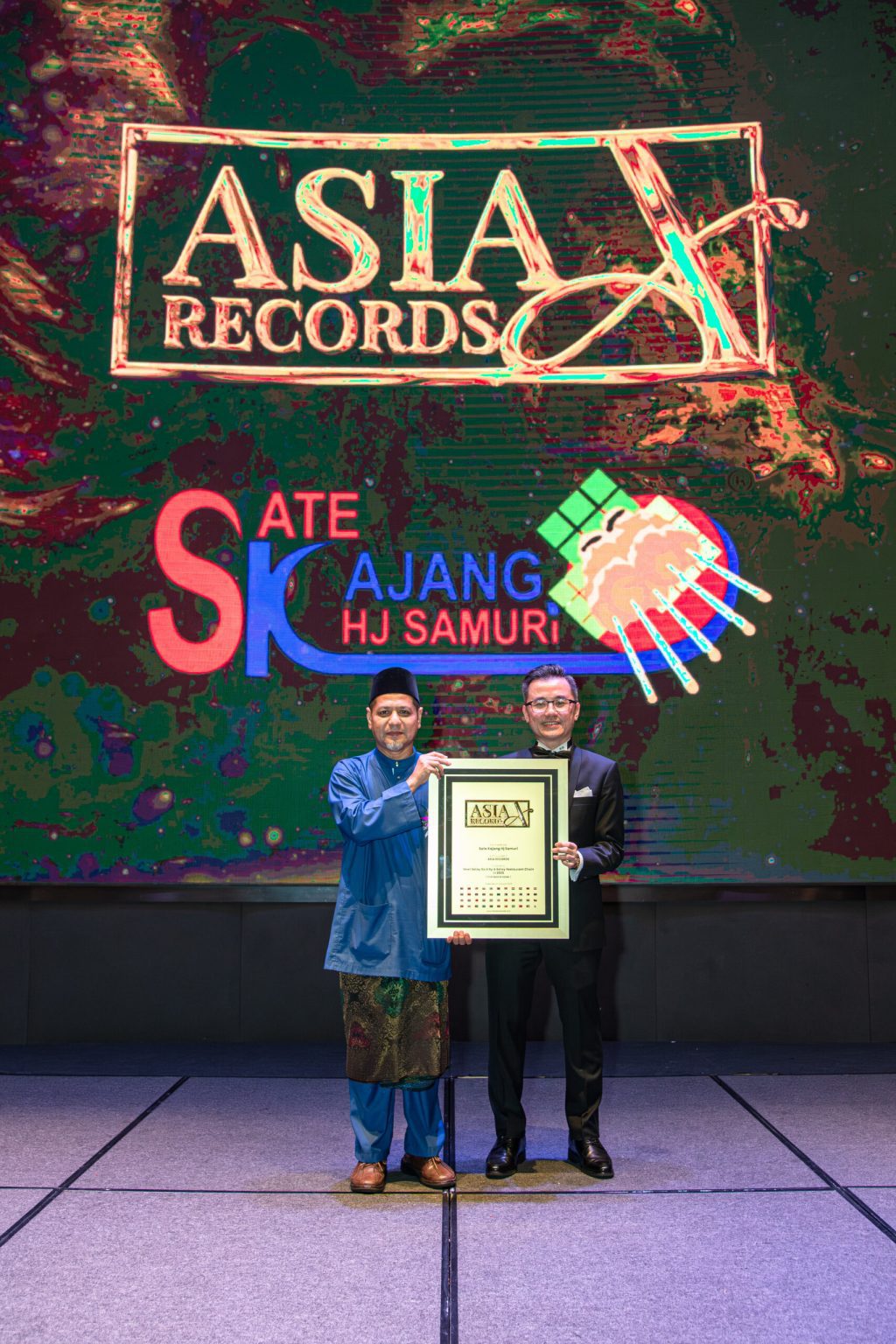
Sate Kajang Haji Samuri Recognised by Asia Record for Most Satay Sold by a Satay Restaurant Chain in 2025
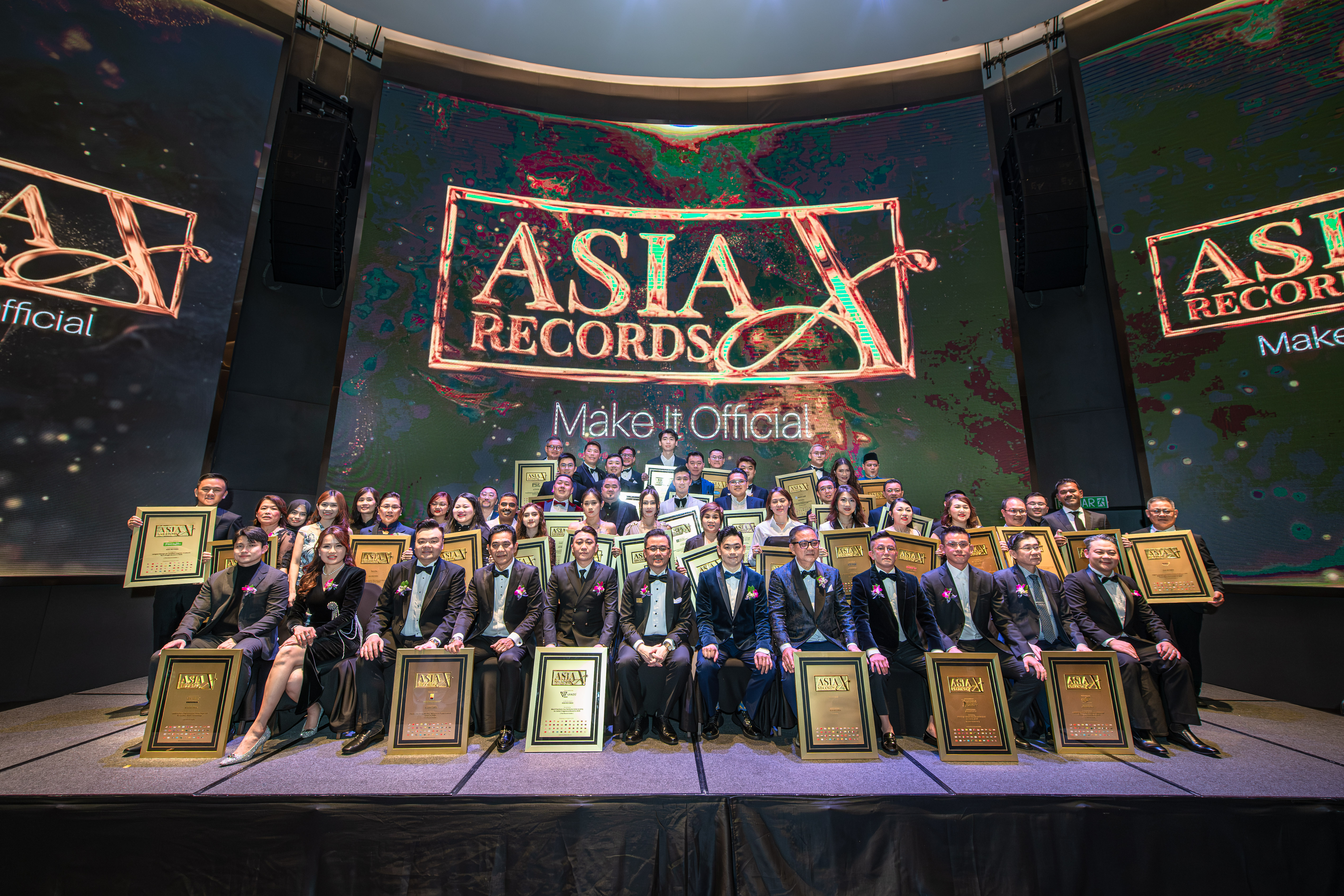
KUALA LUMPUR, Malaysia – Few Malaysian foods are as immediately recognisable as satay. Skewers of marinated meat grilled over an open flame and served with peanut sauce have become part of everything from family dinners and festive gatherings to street-food culture and international introductions to Malaysian cuisine.
And when Malaysians talk about satay, one place is particularly difficult to separate from the conversation: Kajang.
Sate Kajang Haji Samuri, one of the best-known names associated with the town’s satay tradition, has been officially recognised by Asia Record for achieving the “Most Satay Sold by a Satay Restaurant Chain in 2025.”
Represented by Yusnizam, Head of Marketing at Sate Kajang Haji Samuri, the recognition celebrates not only sales volume but also the longevity of a Malaysian food business that has helped carry Kajang-style satay from its local roots to a much wider audience.
From a Kajang Food Tradition to a Restaurant Brand
The story of Sate Kajang Haji Samuri is closely connected with the history of satay in Kajang.
Historical accounts trace the development of Kajang satay to earlier traders including Haji Tasmin Sakiban, from whom the late Datuk Samuri Juraimi learned the craft. Samuri began helping with the satay business while still young before eventually establishing Sate Kajang Haji Samuri as his own business in 1992.
He reportedly started with RM18,000 in capital and a stall at Medan Sate Kajang. What began as a relatively modest food business subsequently developed into a restaurant operation with outlets beyond Kajang.
The growth demonstrated something important about traditional food: heritage does not have to remain small.
With the right systems, consistency and brand identity, a dish associated with a particular town can develop into a recognisable restaurant business while retaining the culinary identity that made it popular in the first place.
Recognised by Asia Record
The scale of Sate Kajang Haji Samuri’s satay sales resulted in its recognition by Asia Record for the “Most Satay Sold by a Satay Restaurant Chain in 2025.”
For a restaurant business built around a product as deceptively simple as grilled meat on skewers, achieving high sales volume requires considerable operational coordination. Meat needs to be prepared and marinated consistently, peanut sauce needs to maintain a familiar flavour, ingredients need to reach different outlets, employees need to follow established preparation methods and customers need to receive an experience that remains recognisable from one visit to the next.
The recognition therefore represents more than the number of skewers served. It reflects the operational scale behind producing and serving a traditional Malaysian food repeatedly across a restaurant network.
Commenting on the recognition, Yusnizam, Head of Marketing at Sate Kajang Haji Samuri, said:
“We are honoured to be recognised by Asia Record as the satay restaurant chain with the most satay sold. This achievement reflects our commitment to quality and our passion for sharing the authentic taste of satay with our customers. We will continue to uphold our standards and delight satay lovers everywhere.”
Why Kajang and Satay Became So Closely Connected
Some foods become inseparable from places.
Ipoh has its white coffee. Penang is strongly associated with char kway teow and assam laksa. Klang is known for bak kut teh. Kajang has satay.
That connection creates something particularly valuable in tourism and branding: a culinary identity.
Visitors do not simply travel somewhere to see buildings or attractions. Food can become part of the reason for making the journey.
A World Intellectual Property Organization study examining Malaysia’s gastronomic tourism sector specifically discussed Kajang satay and identified Sate Kajang Haji Samuri as one of its notable success stories. The study observed that the business helped popularise Kajang as a destination renowned for satay.
This illustrates how a local food business can contribute to the identity of an entire place.
Sate Kajang Haji Samuri is therefore selling more than a meal. Every plate reinforces the association between Kajang and one of Malaysia’s most recognisable foods.
The Simplicity of Satay Is Part of Its Strength
Satay does not need an elaborate explanation.
The basic experience is immediately understandable: marinated meat, skewers, charcoal grilling and peanut sauce.
But simplicity can make consistency more demanding rather than less.
When customers have eaten the same dish repeatedly over many years, they develop strong expectations. They remember the tenderness of the meat, the balance of the marinade, the aroma from the grill and the flavour and texture of the sauce.
Changing those elements too much risks changing what customers believe the brand represents.
This is one of the challenges faced by heritage food businesses as they grow. Expansion requires standardisation, while heritage requires preserving character.
The strongest brands find a way to do both.
More Than Chicken and Beef Satay
Although chicken and beef may be the varieties most familiar to many diners, Sate Kajang Haji Samuri’s product range extends further.
Malaysia’s official halal directory currently lists Sate Kajang Haji Samuri-branded products including chicken, beef, lamb, rabbit, fish, tripe, and liver and gizzard satay, together with peanut sauce, satay seasoning and chilli sambal.
The variety demonstrates how a specialist restaurant can expand its offering while remaining focused on one central food category.
Instead of trying to become a restaurant serving everything, the brand has continued building around satay.
That focus is commercially powerful.
Consumers immediately understand what Sate Kajang Haji Samuri represents.
The Peanut Sauce Matters Too
Satay may receive most of the attention, but anyone familiar with the dish knows that the accompanying sauce can be just as important.
A good peanut sauce contributes sweetness, richness, texture and spice, creating the flavour combination people associate with the complete satay experience.
For restaurant chains, sauces can also become an important part of maintaining consistency. While individual skewers are grilled at restaurant level, centralised preparation of key components can help ensure customers encounter a familiar flavour across different locations.
JAKIM’s current directory includes Sate Kajang Haji Samuri peanut sauce and chilli sambal among the products associated with its processing operation, illustrating how the business behind the restaurants extends into food production as well.
This production capability is one of the less visible elements behind scaling a traditional food business.
Turning a Traditional Dish Into a Scalable Business
A single satay stall can depend heavily on the skill of one cook.
A restaurant chain cannot.
Once a business expands, knowledge has to move from individuals into systems. Recipes need to be documented. Ingredients need to be sourced consistently. Food safety needs to be managed. Staff need training. Supply chains need to function reliably.
Historical reporting on Sate Kajang Haji Samuri documented the development of dedicated processing facilities as the business expanded.
That transition is significant because it shows how traditional food entrepreneurship can evolve.
The product may remain rooted in heritage, but the organisation behind it becomes increasingly modern.
Consistency Is the Real Challenge of Restaurant Expansion
Opening more restaurants is relatively easy compared with making customers want to return to all of them.
Restaurant chains depend on consistency.
A customer who has enjoyed Sate Kajang Haji Samuri in Kajang may expect a similar experience when visiting another location. The brand name creates that expectation before the first skewer reaches the table.
This makes consistency one of the most important assets in food and beverage.
Marketing can persuade someone to visit once. Familiar taste and experience are what help bring them back.
For a heritage food brand, the challenge is even greater because customers may have memories stretching back decades. Some may have eaten the product as children and later return with their own families.
The restaurant is therefore competing not only against other food businesses but also against the customer’s memory of what the food is supposed to taste like.
A Brand Passed Between Generations
Heritage brands are built differently from businesses designed around short-term trends.
Their greatest asset is time.
Sate Kajang Haji Samuri was established in 1992, but its culinary roots stretch further back through Samuri’s experience learning from the earlier Kajang satay tradition associated with Haji Tasmin.
When Datuk Samuri Juraimi passed away in 2017, he left behind more than restaurants. He left a brand closely associated with Kajang itself.
That creates both opportunity and responsibility for the generation continuing the business.
Modernising too aggressively can weaken what makes a heritage brand distinctive. Refusing to change at all can make it irrelevant to younger consumers.
Successful heritage businesses continually negotiate the space between those two extremes.
Malaysian Food Can Build Powerful Brands
Malaysia has an extraordinary food culture, but many iconic dishes remain associated primarily with individual stalls, hawker centres or locations.
There is nothing wrong with that. In fact, small independent operators are part of what makes Malaysian food culture distinctive.
But Sate Kajang Haji Samuri demonstrates another possibility.
Traditional food can also become a structured brand.
It can develop multiple locations.
It can invest in production.
It can build recognisable packaging and signage.
It can create employment.
And it can potentially introduce a local culinary tradition to people who might never have encountered the original stall.
This is where food heritage and entrepreneurship meet.
Food Is One of Malaysia’s Strongest Forms of Soft Power
When visitors remember Malaysia, food is often part of the memory.
Nasi lemak, roti canai, laksa, rendang and satay can communicate something about the country in a way that conventional advertising sometimes cannot.
Food is accessible.
People do not need to understand Malaysian history before enjoying a plate of satay. The experience itself becomes an introduction to the culture.
This gives established Malaysian food brands an opportunity that extends beyond restaurant sales.
They can become ambassadors for Malaysian cuisine.
Satay is particularly suited to this role because the concept is easy to understand internationally while still carrying a strong Southeast Asian identity.
The Value of Staying Focused
One of the most useful business lessons from Sate Kajang Haji Samuri is the power of specialisation.
The brand name itself tells customers what to expect.
Sate. Kajang. Haji Samuri.
There is very little ambiguity.
In an era when businesses are constantly encouraged to expand into new categories, launch new products and chase new trends, there is also value in becoming exceptionally well known for one thing.
Specialisation makes positioning easier.
When consumers think about Kajang satay, a specialist brand has an opportunity to become part of that mental association.
That kind of recognition can take decades to build and is difficult for competitors to replicate quickly.
Preserving Heritage While Reaching New Consumers
The next generation of customers will discover food differently from the generation before them.
They search on social media.
They watch short-form videos.
They read online reviews.
They order through delivery applications.
They discover restaurants through creators rather than newspaper food columns.
For a heritage brand, adapting to these channels does not require changing the fundamental product.
The storytelling can change while the satay remains satay.
In fact, the history behind a brand such as Sate Kajang Haji Samuri can become an advantage in digital marketing because younger consumers increasingly encounter thousands of new food businesses competing for attention.
A genuine story built over decades is difficult to manufacture.
Volume Creates Responsibility
Being recognised for the most satay sold also brings another dimension: responsibility.
The more food a restaurant chain serves, the more important quality control, hygiene, sourcing and operational consistency become.
Malaysia’s JAKIM halal directory currently records Sate Kajang Hj Samuri Processing Sdn. Bhd. and lists a substantial range of satay and related products under its certification records.
For a brand serving a broad Malaysian market, maintaining consumer confidence in areas such as halal compliance and food preparation is fundamental.
Scale magnifies both strengths and weaknesses.
A great customer experience can be repeated thousands of times, but so can a poor one.
Long-term restaurant brands therefore need operational discipline behind the familiarity customers see at the dining table.
The People Behind Every Skewer
High-volume restaurant businesses can easily be reduced to numbers.
Units sold.
Outlets.
Customers.
Revenue.
But every skewer still requires people.
Someone prepares the ingredients. Someone manages production. Someone grills the satay. Someone prepares the sauce. Someone serves the customer. Someone cleans the restaurant after the final table leaves.
The late Datuk Samuri was remembered by employees not only for building the business but also for his approach towards staff. Yusnizam Mohd Naguib, who had worked with him for many years, previously described him as a leader who paid close attention to employees and was willing to listen to problems across different levels of the organisation.
That human element matters in hospitality.
Customers experience the brand through the people delivering it.
From Kajang to a Malaysian Culinary Legacy
The significance of Sate Kajang Haji Samuri is ultimately larger than the number of satay skewers sold in one year.
Its story demonstrates how a traditional dish can become a business, how a business can become a brand and how a brand can become associated with the culinary identity of a place.
The company began with Kajang satay.
More than three decades later, that remains the centre of its identity.
The Asia Record recognition for the “Most Satay Sold by a Satay Restaurant Chain in 2025” therefore represents another chapter in a much longer journey.
For Sate Kajang Haji Samuri, the opportunity ahead is to continue growing without losing the qualities that made generations of customers recognise its name in the first place: familiar flavours, a clear identity and a connection to Kajang’s satay heritage.
Food trends will change. Restaurant technology will change. The way customers order and discover food will continue changing.
But some brands endure because they become associated with something deeper than a menu.
Sometimes, a dish becomes part of a place. And sometimes, a restaurant helps carry that place to the rest of the country.
Customers can learn more about the brand through the official Sate Kajang Haji Samuri website.
For more information about this recognition and other remarkable achievements across Asia, visit AsiaRecord.com.
OFFICIAL ASIA RECORD https://asiarecord.com/
ABOUT OFFICIAL ASIA RECORD HISTORY https://asiarecord.com/about/
OFFICIAL ASIA RECORD Nomination Process: https://asiarecord.com/application/
GET OFFICIAL ASIA RECORD https://asiarecord.com/faq/
FIND OFFICIAL ASIA RECORD https://asiarecord.com/contact-page/
Digital Business
Companies with strong digital platforms can scale faster and reach new customers more efficiently.
Sustainable Growth
Responsible business practices help brands build credibility with investors and consumers.