
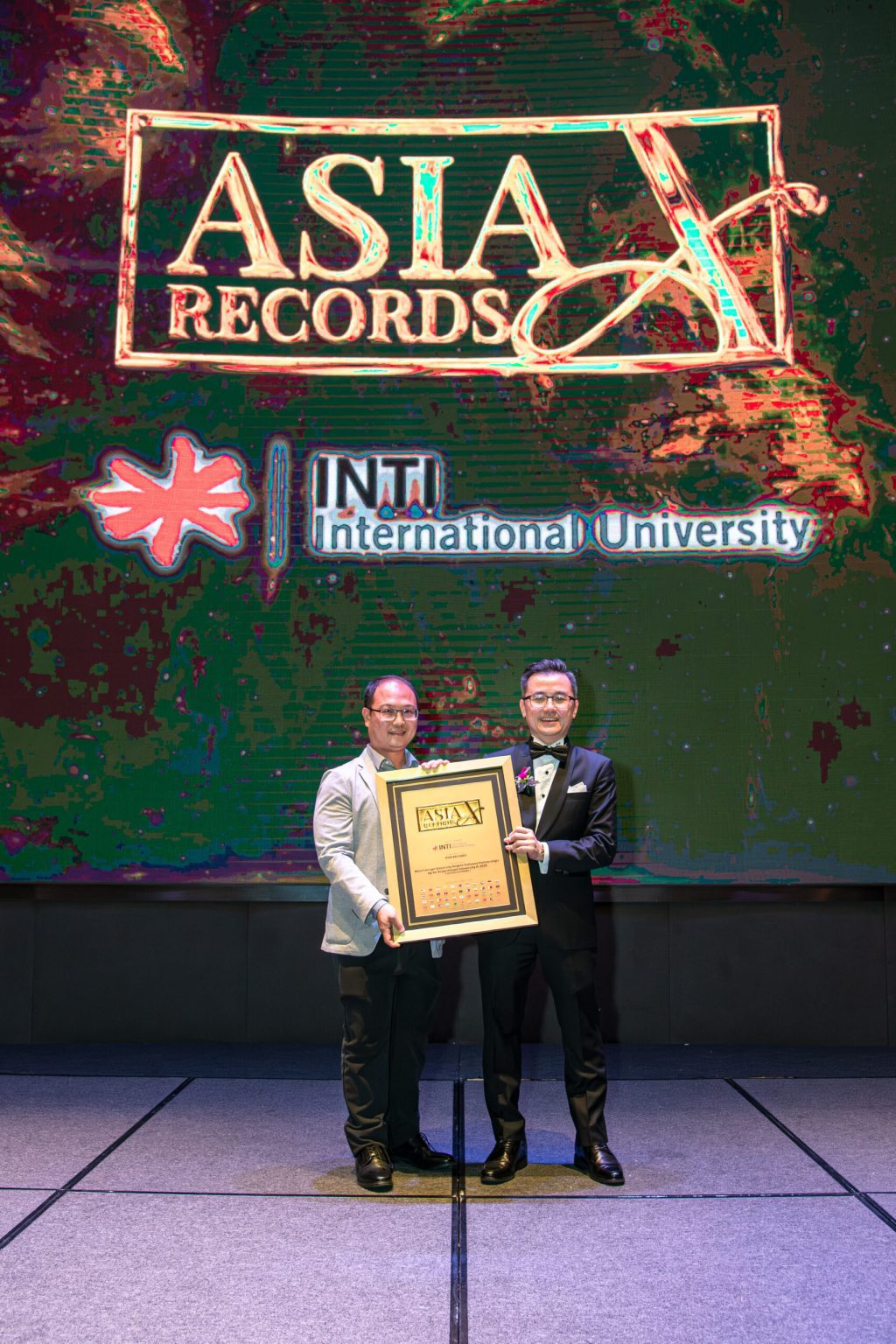
INTI Recognised for Most Foreign University Degree Pathway Partnerships in 2025

KUALA LUMPUR, Malaysia – INTI International University has been officially recognised by Asia Record for achieving the “Most Foreign University Degree Pathway Partnerships by an Asian Private University in 2025,” highlighting the institution’s extensive international academic network and the range of global education pathways available to its students.
The recognition reflects an increasingly important aspect of higher education. Students today are not only choosing what to study; they are also considering where their qualifications can take them, what international exposure they can gain and how their education can prepare them for careers that increasingly cross borders.
Through its network of international university relationships, INTI has developed academic pathways that allow students to begin their education in Malaysia while accessing programmes connected to universities overseas.
Students and parents can explore INTI’s programmes, campuses and international education opportunities through the official INTI website.
Building Education Without Borders
Higher education has become increasingly international.
A student may begin a programme in Malaysia, complete part of a degree overseas, graduate with a qualification connected to an international university and eventually work for an organisation operating across several countries.
This has changed what students expect from universities.
Academic quality remains fundamental, but students are also looking at international exposure, transfer opportunities, industry relevance, employability and the flexibility to choose different educational routes.
INTI has built international academic collaboration into its education model, creating pathways that connect students in Malaysia with universities and education systems around the world.
INTI Recognised by Asia Record
The scale of these international academic relationships resulted in INTI International University being officially recognised by Asia Record for achieving the “Most Foreign University Degree Pathway Partnerships by an Asian Private University in 2025.”
The recognition represents an important milestone in INTI’s internationalisation journey and highlights the role that university collaboration can play in expanding the choices available to students.
It also reflects the collective efforts of INTI’s academic faculty, employees, students and international university network in developing and maintaining pathways that connect Malaysian education with institutions abroad.
Representing INTI for the recognition is Seng Yeang, Head of Career Services Department at INTI International University.
Commenting on the achievement, Seng Yeang said:
“We are honoured to be recognised by Asia Record as the university with the most foreign university degree pathway partnerships. This achievement reflects our commitment to providing students with diverse and quality education options that prepare them for global careers. We will continue to strengthen our partnerships and support our students’ success.”
What Is a University Degree Pathway?
For students and parents, the term “degree pathway” can sometimes sound more complicated than it actually is.
At its core, a pathway provides another route towards completing a university qualification.
Instead of following only one fixed academic journey, students may have opportunities to begin their studies at INTI and subsequently progress through arrangements connected to overseas universities.
Depending on the programme, these can include transfer arrangements, twinning structures, articulation routes or degrees developed in collaboration with international institutions.
The exact structure differs between programmes, so students need to understand the academic requirements and progression conditions associated with the pathway they choose.
The important advantage is choice.
A student can consider academic interests, financial circumstances, preferred destination and career ambitions before deciding which route is most appropriate.
Malaysia as a Gateway to International Education
Malaysia occupies an interesting position within the international education landscape.
Students can access English-medium higher education while living in a multicultural Asian environment, and many institutions have developed academic relationships with universities in countries such as the United Kingdom, Australia and the United States.
This creates an alternative to immediately spending several years overseas.
For some families, beginning a degree in Malaysia can provide greater financial flexibility. For students, it can also create time to adapt to university life before deciding whether an overseas experience is right for them.
International pathways therefore make global education less binary.
The choice is no longer necessarily between studying entirely in Malaysia or entirely overseas.
There can be multiple routes in between.
International Partnerships Need Academic Purpose
Having a long list of international university relationships may look impressive, but the number itself should not be the only consideration.
What matters to students is what those relationships actually enable.
Can credits be transferred?
What qualification will the student receive?
What are the academic requirements?
Which subjects are available?
How much of the programme can be completed in Malaysia?
What are the costs if the student decides to study overseas?
These are the practical questions that determine whether a university pathway creates meaningful value.
For INTI, the significance of its Asia Record recognition therefore extends beyond the scale of its international network. The greater opportunity is using that network to provide students with practical educational choices.
Global Exposure Without a Single Route
One of the strengths of international education is that global exposure does not need to look the same for every student.
Some students want to spend several years abroad.
Others may prefer to complete most of their studies in Malaysia.
Some want a foreign university qualification while remaining closer to home.
Others may use Malaysia as the first stage of an international education journey.
Financial circumstances also differ significantly between families.
Creating multiple pathways allows universities to respond to this diversity rather than expecting every student to follow the same model.
This flexibility is particularly relevant in Asia, where demand for international qualifications remains strong but affordability is an important consideration for many families.
Preparing Students for a Globalised Workplace
International education is not valuable simply because a foreign university name appears on a certificate.
The workplace itself has become increasingly international.
A Malaysian graduate may work for a Singaporean company, report to a manager in Australia, collaborate with colleagues in India and communicate with customers in Europe without ever leaving Kuala Lumpur.
Technology has made this normal.
Employers therefore increasingly value graduates who can communicate across cultures, work with different perspectives and adapt to unfamiliar environments.
Universities have an opportunity to develop these capabilities through international classrooms, overseas experiences, collaborative projects and exposure to different academic approaches.
For students, the real value of internationalisation should ultimately appear in how effectively they can navigate the world after graduation.
Education and Employability Need to Connect
INTI’s representation for this Asia Record recognition by its Head of Career Services Department also highlights another important dimension of modern higher education: the connection between education and employment.
Students invest several years of their lives in university.
Naturally, they want to know what happens afterwards.
Career services can help bridge the transition between academic study and professional life through employer engagement, career guidance, internships, workshops and other employability initiatives.
International pathways can add another dimension by exposing students to academic environments and expectations beyond their home country.
But a foreign pathway alone does not guarantee career success.
Students still need communication skills, professional confidence, practical experience and the ability to apply what they have learned.
The strongest education models therefore connect academic qualifications with employability development.
International Education Is Also Cultural Education
Studying within an international environment can teach lessons that do not appear in textbooks.
Students encounter people with different languages, cultures, beliefs and ways of thinking.
They may need to collaborate with classmates whose assumptions are completely different from their own.
That experience can be uncomfortable at times, but it is also valuable.
The ability to listen, adapt and communicate across cultures is increasingly important in multinational workplaces.
Malaysia’s multicultural environment already provides a natural foundation for this type of learning.
When combined with international university pathways and a diverse student community, the university experience can become a form of cultural education as well as academic education.
The Role of Technology in International Education
International collaboration no longer depends entirely on physical travel.
Digital learning platforms, video conferencing and collaborative software have made it possible for students and academics in different countries to work together more easily.
This creates new possibilities for universities.
International exposure can potentially begin before a student boards an aircraft.
Students may participate in virtual projects, interact with academics abroad, collaborate with international classmates or access learning resources developed across different institutions.
Physical overseas study remains valuable, but technology is expanding what international education can mean.
For universities with extensive international networks, the opportunity is to connect those relationships more deeply through both physical and digital experiences.
Students Need Flexibility
Another major change in higher education is the growing demand for flexibility.
Students may change their career interests.
Family circumstances may change.
Financial conditions may change.
A student who initially plans to transfer overseas may later decide to remain in Malaysia, while another student may discover an international opportunity after beginning a local programme.
A well-developed pathway system can provide options when circumstances evolve.
This is particularly important because choosing a university at 18 or 19 years old is a significant decision.
Students are effectively making choices about careers and industries they may not yet fully understand.
Education systems that provide multiple routes can give them more room to adapt.
Choosing the Right Pathway Still Requires Research
The large number of international options available to students also creates responsibility.
More choice can be beneficial, but it can also become confusing.
Students should look beyond university names and marketing materials when evaluating a pathway.
They should understand the programme structure, qualification awarded, academic progression requirements, tuition costs, potential overseas living expenses and the recognition relevant to their intended profession.
Professional programmes may also involve additional accreditation or regulatory requirements depending on the country in which a graduate eventually wants to practise.
Parents and students should therefore treat an international pathway as an important educational decision rather than simply a branding advantage.
The best pathway is not necessarily the one connected to the most famous destination.
It is the one that best matches the student’s academic goals, circumstances and future plans.
International Networks Can Create Long-Term Value
University relationships can potentially extend beyond student transfers.
Strong international academic networks can support research collaboration, faculty exchanges, curriculum development, joint projects and knowledge sharing between institutions.
These relationships can become particularly valuable as universities respond to fast-changing industries.
Artificial intelligence, data science, cybersecurity, biotechnology, sustainability and other emerging areas are developing too quickly for education institutions to operate entirely in isolation.
International collaboration can help universities exchange ideas and understand how different markets are responding to these changes.
For students, that can translate into curricula and learning experiences that are more connected to developments beyond their immediate environment.
A Malaysian Education Brand with International Reach
INTI’s development reflects the broader growth of Malaysia as an education destination.
Malaysian private higher education institutions increasingly compete not only with one another but also with universities across the region.
International relationships can help differentiate an institution, but reputation ultimately depends on the student experience and graduate outcomes.
For INTI, its network of foreign university degree pathways provides an important platform from which to continue developing its international position.
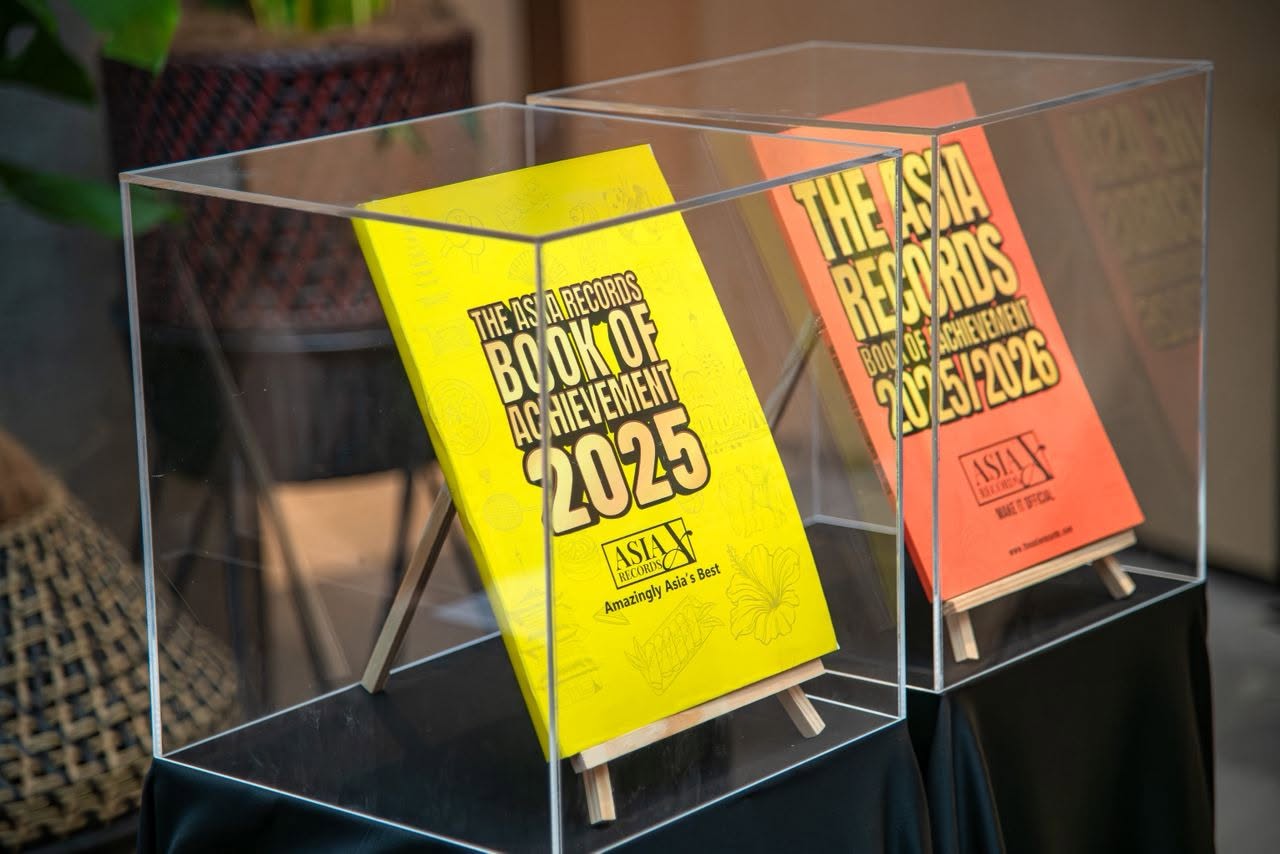
The Asia Record recognition gives visibility to the scale of that network.
The next challenge is ensuring those relationships continue creating meaningful opportunities for students.
The Future of Higher Education Will Be More Connected
The traditional idea of a university as an institution serving mainly students from its immediate geographic area is changing.
Higher education is becoming more connected.
Students move between countries.
Universities collaborate across borders.
Courses are delivered digitally.
Employers recruit internationally.
Research teams work across continents.
Qualifications and skills increasingly need to function within a global economy.
This does not mean local education becomes less important.
Instead, successful institutions will increasingly combine strong local foundations with international connections.
INTI’s extensive degree pathway network represents one example of how this model can develop.
Continuing the INTI Journey
INTI International University’s recognition by Asia Record for the “Most Foreign University Degree Pathway Partnerships by an Asian Private University in 2025” represents an important milestone in its international education journey.
The achievement highlights the scale of its foreign university pathway network, but the greater significance lies in what those connections can provide to students.
More pathways mean more choices.
More international relationships can create broader academic exposure.
And greater flexibility can allow students to build an education journey around their own ambitions rather than following a single predetermined route.
As higher education becomes increasingly international, institutions will be judged not only by what happens inside the classroom but also by how effectively they connect students to opportunities beyond it.
For INTI, continuing to strengthen those connections while maintaining academic quality, career relevance and student support will be central to the next stage of its development.
Because ultimately, the value of a global education network is not measured only by how many universities it connects, but by how many possibilities it creates for students.
Students and parents can explore INTI’s programmes and international education pathways through the official INTI International University & Colleges website.
For more information about this recognition and other remarkable achievements across Asia, visit AsiaRecord.com.
Digital Business
Companies with strong digital platforms can scale faster and reach new customers more efficiently.
Sustainable Growth
Responsible business practices help brands build credibility with investors and consumers.