
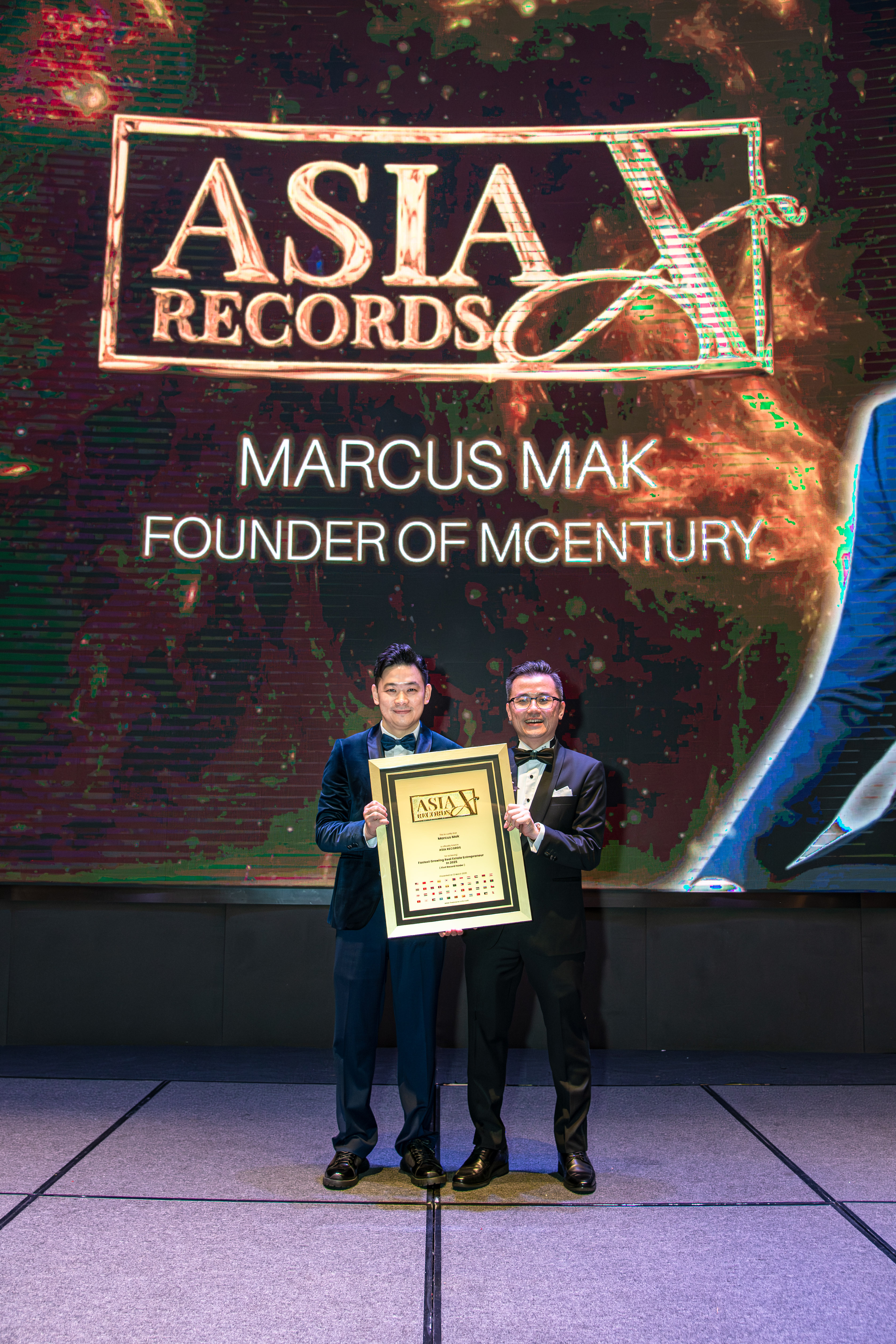
Marcus Mak Recognised as Fastest Growing Real Estate Entrepreneur in 2025
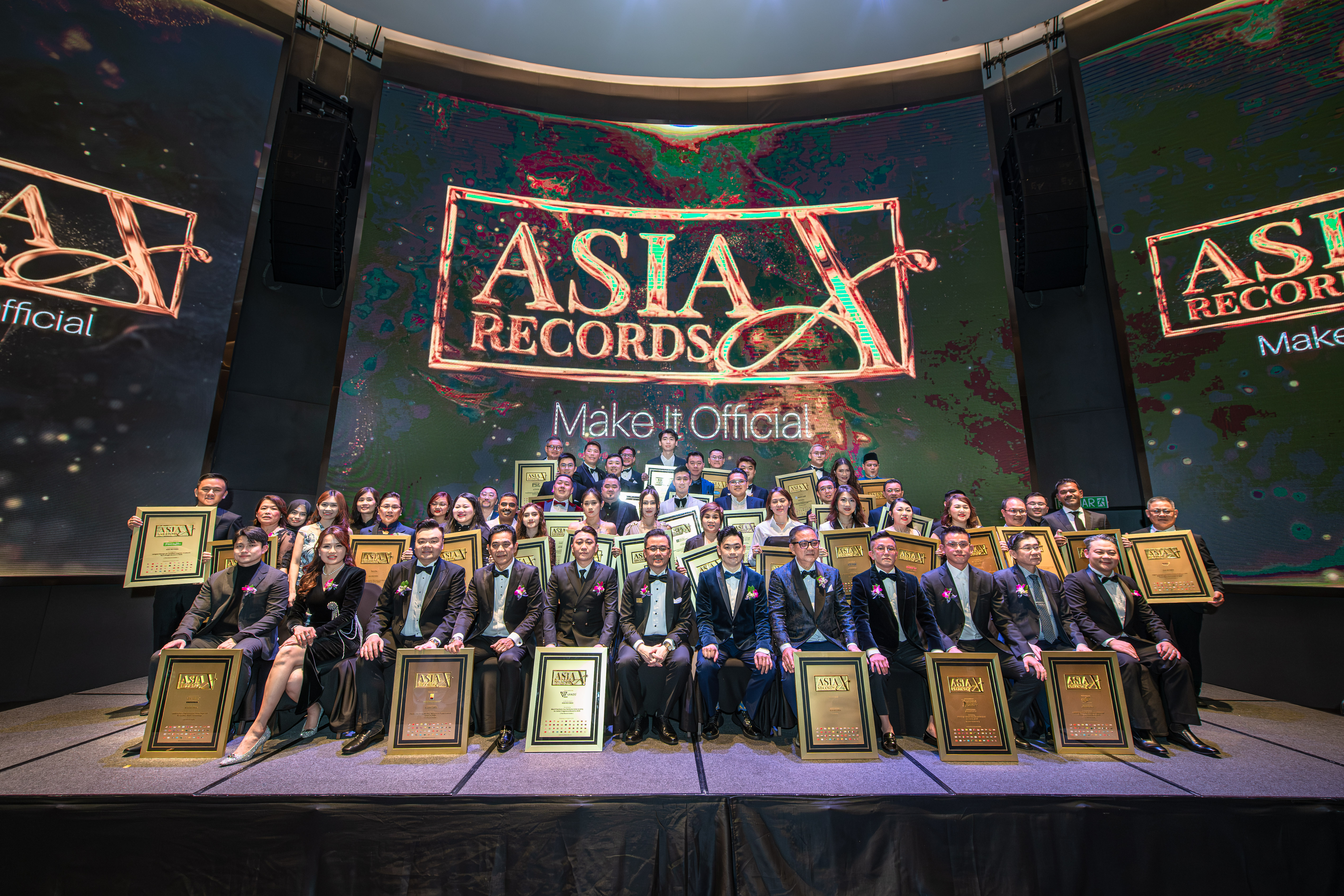
KUALA LUMPUR, Malaysia – Malaysian real estate entrepreneur Marcus Mak has been officially recognised by Asia Record as the “Fastest Growing Real Estate Entrepreneur in 2025,” marking another milestone in a property career spanning more than two decades.
As the founder of MCentury Properties, Marcus has built his career around property sales, agency development and the creation of teams capable of operating at significant scale. His journey from real estate agent to agency founder reflects how entrepreneurship in the property industry increasingly involves much more than selling homes.
Today, successful real estate entrepreneurs need to understand people, technology, market trends, leadership, developer relationships and organisational growth.
More about Marcus and the organisation he founded can be found through the official MCentury website.
From Real Estate Agent to Entrepreneur
Marcus Mak began his real estate career in 2002.
Like many people entering the industry, his starting point was sales. He needed to understand customers, properties, negotiations and the realities of building a career in a highly competitive market.
Over time, that individual sales career developed into something much larger.
Marcus went on to become a co-founder of GS Realty, where he gained experience building and managing a large real estate organisation. According to his official MCentury profile, the agency grew to more than 10,000 agents and managed over 200 projects concurrently during that chapter of his career.
In 2021, Marcus took another entrepreneurial step by establishing MCentury Properties, creating a new platform around his vision for the real estate industry.
That transition from salesperson to organisational leader is central to understanding his entrepreneurial journey.
Marcus Mak Recognised by Asia Record
Marcus Mak’s growth and development within the property sector resulted in his official recognition by Asia Record as the “Fastest Growing Real Estate Entrepreneur in 2025.”
The recognition highlights his entrepreneurial trajectory as well as the organisation, systems and people that have developed around his leadership.
It also follows another Asia Record milestone associated with the business he founded, with MCentury recognised as the “Fastest-Growing Prestige Real Estate Agency in 2025.”
Together, the recognitions highlight two sides of the same growth story: the entrepreneur and the organisation built around his vision.
Commenting on his individual recognition, Marcus said:
“I am honoured to be recognised by Asia Record as the fastest growing real estate entrepreneur. This achievement motivates me to continue pushing boundaries and delivering value to my clients and partners. I look forward to further growth and success in the industry.”
Growth Is More Than Selling More Property
In real estate, growth is often measured through transaction value.
But an entrepreneur building a property organisation needs to think beyond individual transactions.
How quickly can the organisation recruit and develop people?
Can new agents become productive?
Can leaders build their own teams?
Can technology make operations more efficient?
Can the organisation maintain relationships with developers while simultaneously serving thousands of buyers?
And most importantly, can the business continue functioning as it becomes larger?
These questions separate individual sales success from entrepreneurship.
MCentury’s early expansion illustrates the difference. According to the company, its organisation grew from approximately 400 agents to more than 2,000 within one year, while achieving RM3.5 billion in GDV sales in 2022.
By 2023, reported sales had risen to RM4.32 billion, involving 8,906 units.
Growth at that level requires systems rather than individual effort alone.
Building People Before Building Numbers
Real estate is fundamentally a people business.
A property agency may sell buildings, but the organisation itself is built around human capability.
Agents need product knowledge.
Leaders need management skills.
Teams need motivation.
Customers need confidence.
Developers need results.
This is why Marcus has placed significant emphasis on organisational development and leadership.
His approach reflects a simple reality: an entrepreneur can personally close only a limited number of transactions. A well-developed organisation can achieve significantly more.
The entrepreneur’s role therefore changes as the business grows.
Instead of asking, “How can I sell more?”, the question becomes, “How can I help more people become capable of producing results?”
That is a very different type of leadership.
Creating an Agent-First Culture
One of the ideas associated with MCentury’s development has been its emphasis on the experience of real estate agents themselves.
Property agencies compete for customers, but they also compete for talented salespeople.
An agent deciding where to build a career may consider commission structures, payment speed, training, leadership support, technology, project access and company culture.
Marcus recognised that improving the agent experience could become a competitive advantage.
MCentury has introduced initiatives around training, leadership development and operational support, including a fast commission payout system designed to improve cash flow for agents.
These initiatives demonstrate a broader entrepreneurial principle: sometimes the customer is not the only person whose experience needs to be redesigned.
Improving the experience of the people delivering the service can ultimately influence the experience received by the customer.
Technology Is Changing Real Estate Agencies
The traditional image of a property agent carrying folders of brochures and making endless telephone calls is changing.
Digital marketing has transformed lead generation.
Social media allows agents to build personal brands.
Virtual tours can introduce properties before physical viewings.
Customer relationship management systems can organise leads and follow-ups.
Data can help agencies understand sales performance.
Artificial intelligence is beginning to influence content creation, customer communication and market analysis.
Marcus has consistently positioned technology as an important part of MCentury’s development.
But technology alone does not create a successful agency.
The competitive advantage comes from integrating technology with people, processes and leadership.
A sophisticated system is useless if nobody uses it effectively.
Property Entrepreneurship Requires Market Understanding
Real estate also differs from many industries because the market moves in cycles.
Interest rates change.
Financing conditions change.
Government policies change.
Construction costs change.
Buyer sentiment changes.
Different locations rise and fall in popularity.
A strategy that works during a rapidly rising market may not work when buyers become more cautious.
Marcus has publicly emphasised the importance of research and patience when making property decisions, particularly for buyers considering second properties.
His approach highlights the importance of understanding location, infrastructure, amenities and long-term objectives rather than simply following market excitement.
For a real estate entrepreneur, market knowledge needs to flow throughout the organisation so agents can communicate more effectively with customers.
Location Still Matters
Technology has changed how property is marketed, but it has not eliminated one of the oldest principles in real estate: location.
Connectivity, infrastructure, employment centres, amenities, schools and future development can all influence demand.
Marcus has previously highlighted the importance of choosing property locations according to investment objectives and lifestyle requirements rather than relying solely on popular opinion.
This is especially important for investors.
A property purchase is different from buying an ordinary consumer product. The financial commitment is larger, the holding period can be measured in decades and mistakes can be expensive.
Responsible property entrepreneurship therefore involves helping customers understand decisions rather than simply pushing for transactions.
Building Relationships with Developers
Large property agencies operate between two important groups.
On one side are property developers that need effective sales distribution.
On the other are buyers looking for suitable properties.
The agency sits between them.
Maintaining that position requires trust from both sides.
Developers expect agencies to understand projects, generate leads, manage sales teams and deliver results. Buyers expect agents to provide accurate information and help them navigate what may be one of the largest financial commitments of their lives.
As an agency expands, maintaining those relationships becomes increasingly complex.
Marcus’s entrepreneurial development has therefore involved not only building a sales force but also developing relationships across Malaysia’s wider property ecosystem.
Leadership Changes as an Organisation Grows
Leading 20 people is different from leading 200.
Leading 2,000 is different again.
At a certain scale, the founder cannot personally communicate with everyone every day.
Culture therefore becomes important.
Values need to be understood without the founder constantly repeating them. Leaders need to develop other leaders. Systems need to provide consistency.
This is one of the hardest transitions for entrepreneurs.
The characteristics that help someone build a company at the beginning are not always the same characteristics needed to manage it at scale.
A founder initially does everything.
Later, the founder needs to empower others.
The ability to make that transition often determines whether a business remains dependent on one person or develops into a sustainable organisation.
Real Estate Is Becoming a Personal Brand Industry
Another significant change in the property sector is the rise of the individual agent as a media brand.
Social platforms have given agents direct access to audiences.
An agent can create property tours, market commentary, educational videos and neighbourhood guides without relying entirely on traditional advertising.
This changes the role of the agency.
The strongest organisations increasingly need to help agents develop not only selling skills but also communication, content and digital marketing capabilities.
For entrepreneurs such as Marcus, this creates an interesting opportunity.
Instead of building one corporate brand supported by thousands of anonymous agents, a modern property organisation can potentially develop thousands of individual brands operating within a larger ecosystem.
That can significantly increase the organisation’s reach.
Success Needs to Be Repeatable
One strong sales year is valuable.
Building a business capable of producing results repeatedly is much harder.
This is where systems become critical.
Recruitment needs a process.
Training needs a process.
Lead management needs a process.
Sales tracking needs a process.
Commission payments need a process.
Leadership development needs a process.
Without systems, rapid expansion can create disorder.
For a fast-growing entrepreneur, the challenge is therefore not simply accelerating growth. It is ensuring that the organisation underneath that growth becomes stronger at the same time.
Creating Opportunities for the Next Generation
The property industry has historically attracted entrepreneurial people because the barriers to beginning a sales career can be lower than in industries requiring significant startup capital.
But building a sustainable career is difficult.
New agents need guidance, confidence and practical skills.
This creates an important role for established industry leaders.
Marcus’s development of MCentury has increasingly involved creating an environment where agents can learn, build teams and potentially develop their own leadership capabilities.
This can create a multiplier effect.
An entrepreneur builds leaders.
Those leaders develop teams.
Those teams create opportunities for more people.
The organisation grows not simply because more agents join, but because more people become capable of leading.
Growth Also Creates Responsibility
Rapid growth is exciting, but scale creates responsibility.
A larger organisation influences more customers.
More agents represent the brand.
More transactions increase operational complexity.
More visibility creates greater expectations.
For real estate entrepreneurs, long-term credibility therefore becomes increasingly important as the organisation expands.
Training, ethical sales practices, accurate information and responsible communication all become essential to maintaining trust.
Growth without governance can create problems.
Sustainable growth requires both ambition and discipline.
The Entrepreneur Behind the Organisation
It is easy to look at an agency with thousands of agents and focus only on the numbers.
But organisations usually begin with a much smaller decision.
Someone decides to start.
For Marcus, that journey began more than two decades ago as a real estate agent.
The progression from individual agent to co-founder of a major agency and subsequently founder of MCentury demonstrates how a career can evolve when experience is repeatedly turned into new entrepreneurial opportunities.
Each stage requires different capabilities.
Selling.
Recruiting.
Managing.
Leading.
Strategising.
Building systems.
Developing people.
That evolution is ultimately what makes entrepreneurship different from simply running a business.
Continuing the Marcus Mak Journey
Marcus Mak’s recognition by Asia Record as the “Fastest Growing Real Estate Entrepreneur in 2025” represents an important milestone in a journey that began in the property industry more than two decades ago.
But rapid growth also raises the expectations for what comes next.
The challenge is no longer simply to become bigger.
It is to build better systems, develop stronger leaders, create more capable teams and maintain the trust of customers and the wider property industry.
For Marcus, the next chapter will therefore be measured not only by transaction values or organisational size, but by whether the platform he has created can continue producing opportunities for the people within it.
Property may be the industry.
Sales may be the engine.
But entrepreneurship ultimately comes down to something larger:
building something that can grow beyond the person who started it.
More information about Marcus Mak and MCentury Properties can be found through the official MCentury website.
For more information about this recognition and other remarkable achievements across Asia, visit AsiaRecord.com.
OFFICIAL ASIA RECORD https://asiarecord.com/
ABOUT OFFICIAL ASIA RECORD HISTORY https://asiarecord.com/about/
OFFICIAL ASIA RECORD Nomination Process: https://asiarecord.com/application/
GET OFFICIAL ASIA RECORD https://asiarecord.com/faq/
FIND OFFICIAL ASIA RECORD https://asiarecord.com/contact-page/
Digital Business
Companies with strong digital platforms can scale faster and reach new customers more efficiently.
Sustainable Growth
Responsible business practices help brands build credibility with investors and consumers.