
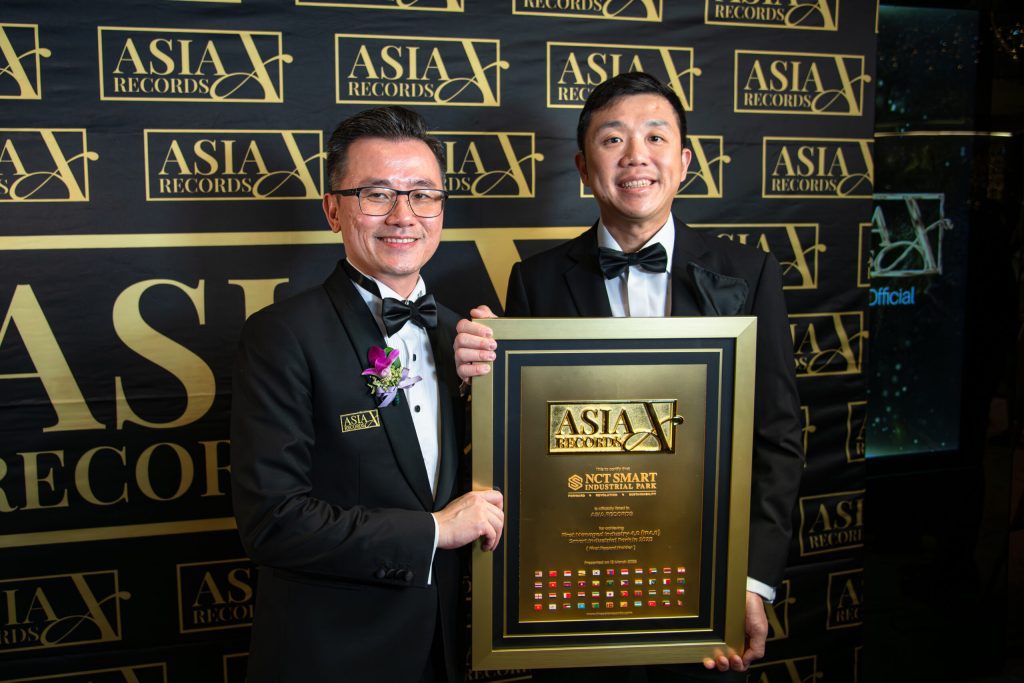
NCT Smart Industrial Park Recognised by Asia Record as First Managed Industry 4.0 (IR4.0) Smart Industrial Park in 2025
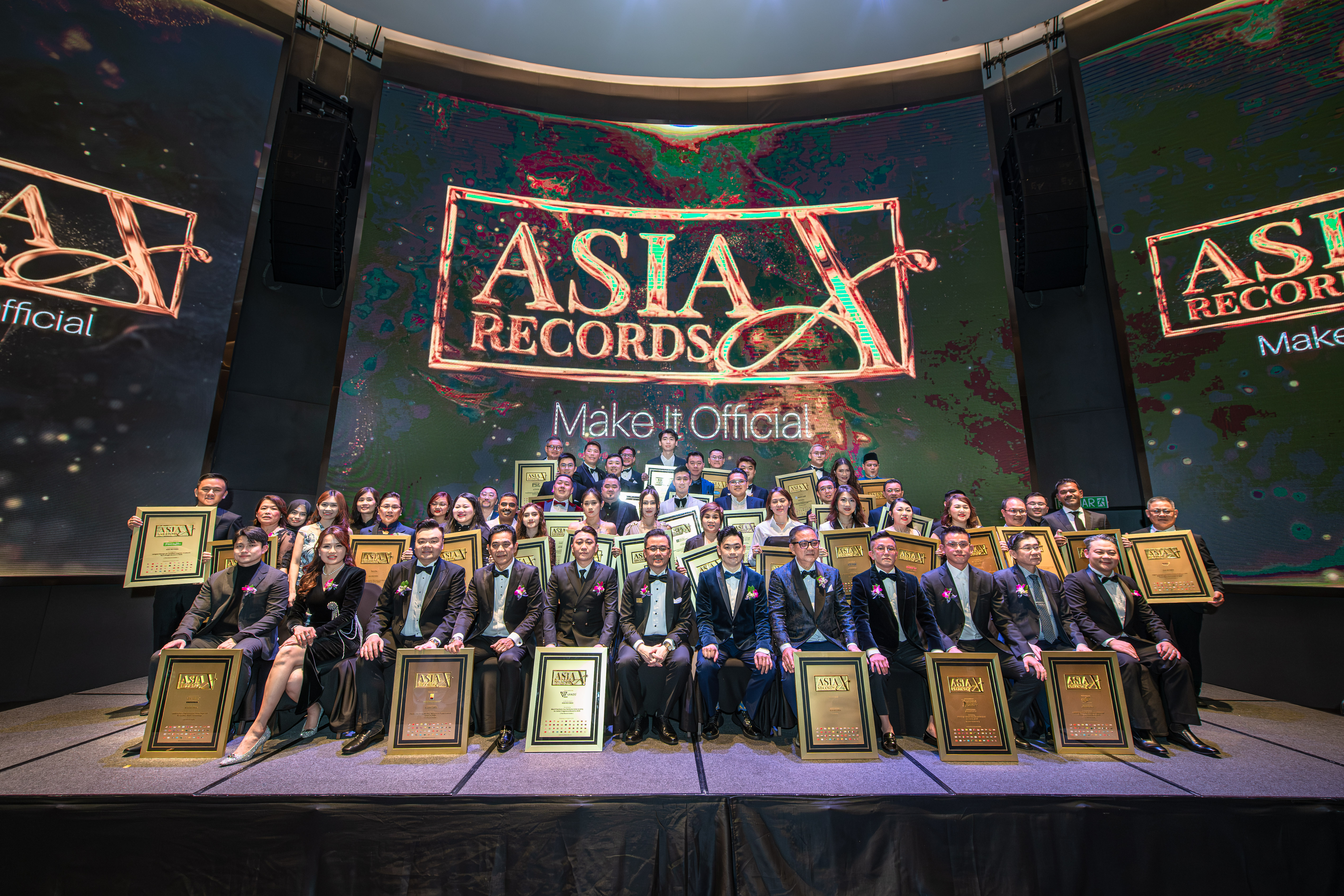
KUALA LUMPUR, Malaysia – Factories are changing. The industrial parks built around them need to change too.
As manufacturers adopt automation, artificial intelligence, connected machinery, advanced data analytics and digital production systems, industrial property can no longer be viewed simply as land, roads, utilities and factory buildings. Increasingly, the infrastructure surrounding manufacturers needs to become part of the technology ecosystem itself.
Against this transformation, NCT Smart Industrial Park (NSIP) has been officially recognised by Asia Record as the “First Managed Industry 4.0 (IR4.0) Smart Industrial Park in 2025.”
Located within the Integrated Development Region in South Selangor (IDRISS), the 732-acre development is designed around the integration of smart technology, managed industrial infrastructure, sustainability and business support within a single industrial ecosystem.
Led by Executive Director Yap Chun Theng, the development represents a broader shift in Malaysia’s industrial property sector: from simply providing factories to creating environments designed to help businesses operate, connect and grow.
Businesses can explore the development through the official NCT Smart Industrial Park website.
From Industrial Park to Industrial Ecosystem
For decades, the fundamental requirements of an industrial park were relatively straightforward. Businesses needed suitable land, reliable electricity and water, road access and buildings capable of supporting manufacturing or warehousing.
Those fundamentals remain important, but modern industry requires much more.
Manufacturers increasingly depend on high-speed connectivity, automation, cloud platforms, cybersecurity, data infrastructure, intelligent security systems and digitally connected supply chains.
NCT Smart Industrial Park has been conceived around this changing industrial environment.
Rather than treating technology as something individual businesses need to install after moving in, NSIP incorporates digital readiness and managed solutions into the broader industrial park concept.
Its stated objective is to accelerate business growth, support environmental sustainability and improve employee efficiency through the integration of smart technology within one industrial ecosystem.
Recognised by Asia Record
NCT Smart Industrial Park’s approach to combining managed industrial infrastructure with Industry 4.0 capabilities resulted in its recognition by Asia Record as the “First Managed Industry 4.0 (IR4.0) Smart Industrial Park in 2025.”
The recognition highlights the development’s efforts to integrate physical industrial infrastructure with technologies and systems associated with the Fourth Industrial Revolution.
For manufacturers, this evolution is significant because competitiveness increasingly depends on more than factory size or production capacity. The ability to connect equipment, analyse data, automate processes, protect digital infrastructure and respond quickly to changing market conditions can influence productivity and long-term competitiveness.
Commenting on the recognition, Yap Chun Theng, Executive Director of NCT Smart Industrial Park, said:
“We are honoured to be recognised by Asia Record as the first managed Industry 4.0 smart industrial park. This achievement reflects our dedication to innovation, technology integration, and sustainable industrial growth. We will continue to lead the way in smart industrial solutions.”
What Makes an Industrial Park “Smart”?
The word “smart” has become common across property development.
There are smart homes, smart offices, smart cities and smart factories.
But within an industrial environment, smart infrastructure needs to produce practical benefits.
NCT identifies several core technologies behind its IR4.0 vision, including cybersecurity, autonomous robotics, Internet of Things (IoT), artificial intelligence and big data analytics. The park is also designed around 5G connectivity to support increasingly connected industrial operations.
These technologies can potentially influence how factories monitor equipment, manage production, communicate with suppliers, analyse operational performance and automate repetitive processes.
The important shift is that industrial property is no longer simply the physical location where technology operates.
The industrial environment itself is becoming technology-enabled.
5G as Industrial Infrastructure
For consumers, 5G is often associated with faster smartphones.
For industry, its potential is considerably broader.
Modern factories can contain large numbers of connected machines, sensors, cameras, autonomous systems and monitoring devices. These systems generate and exchange significant amounts of information.
Reliable connectivity therefore becomes part of industrial infrastructure.
NCT positions NSIP around 5G-enabled connectivity as part of its smart communication environment, supporting its ambition to create a more connected industrial ecosystem.
Selangor’s own development plan also identifies NCT Smart Industrial Park as the first Managed Industrial Park in the state driven by ESG principles while offering 5G connectivity.
The significance is not simply faster internet. The greater opportunity is enabling manufacturers to operate increasingly connected production environments.
A 732-Acre Industrial Development
Scale is another important element of the NSIP proposition.
The development spans approximately 732 acres within South Selangor’s IDRISS growth corridor. The Selangor State Legislative Assembly also identifies the project at approximately 732.5 acres within Kuala Langat.
Its industrial property offerings include detached, semi-detached, link-hybrid and built-to-suit factory configurations, allowing businesses with different operational requirements to consider different forms of industrial space.
But the scale of the project is important for another reason.
A large industrial development creates the opportunity to build an ecosystem rather than a collection of unrelated factories.
Manufacturers can potentially operate alongside suppliers, service providers, technology companies, logistics businesses and other organisations supporting the wider industrial value chain.
This concentration can create efficiencies that extend beyond individual factory lots.
Location Still Matters in the Digital Economy
Industry 4.0 may be digital, but factories still need to move physical goods.
That means location remains fundamental.
NCT Smart Industrial Park is positioned within South Selangor with connectivity to important logistics infrastructure including Kuala Lumpur International Airport, Port Klang and major highway networks.
This combination of digital and physical connectivity is particularly important for manufacturing.
A factory may use AI to optimise production, but finished products still need to reach customers.
Raw materials still need to arrive.
Employees still need to travel.
Exporters still need access to airports and seaports.
The industrial parks of the future therefore need to connect two worlds: the digital movement of information and the physical movement of goods.
Sustainability Is Becoming an Industrial Requirement
Environmental sustainability is also moving from a corporate aspiration towards an increasingly important operational consideration.
Manufacturers face growing expectations from regulators, multinational customers, investors and supply chains around energy consumption, emissions, waste and environmental performance.
NCT Smart Industrial Park incorporates sustainability into its master planning rather than treating it as an optional addition.
The development has obtained GreenRE certification and includes solar-ready industrial lots, energy-efficient buildings, water-management initiatives, recycling and composting programmes and significant green spaces.
In February 2025, NSIP also became Malaysia’s first managed smart industrial park to achieve the highest 5-Diamond recognition under the Low Carbon Cities 2030 Challenge, according to NCT.
This is important because industrial sustainability increasingly affects commercial competitiveness.
For companies supplying multinational corporations, environmental performance can influence whether they remain eligible within international supply chains.
The Factory of the Future Needs More Than a Factory
A manufacturer considering a new facility traditionally focuses heavily on the factory itself.
How much floor space is available?
What is the floor loading?
How much electricity is supplied?
Can trucks access the site?
Those questions remain critical.
But businesses increasingly need to consider the surrounding environment as well.
Is high-speed connectivity available?
Can employees live or commute conveniently?
What business services are nearby?
How is security managed?
Can the facility support future automation?
Does the development provide infrastructure aligned with sustainability requirements?
NCT Smart Industrial Park attempts to address these broader considerations by treating the park as an operating environment rather than simply an industrial property development.
Managed Industrial Parks Represent a Different Model
The word “managed” is an important part of the NSIP concept.
Traditional industrial estates can become fragmented over time as individual owners manage their properties independently.
A managed industrial park introduces a more coordinated approach to areas such as infrastructure, security, landscaping, facilities and the broader operating environment.
The concept is familiar in other types of property.
Shopping centres are managed.
Hotels are managed.
Office towers are managed.
Industrial property is increasingly moving in the same direction.
For businesses, the potential advantage is a more organised environment with shared standards and services.
For the park itself, management can help protect the quality and long-term positioning of the overall development.
Security Is Becoming Both Physical and Digital
Industrial security traditionally focused on gates, guards, fences and surveillance.
Those remain important, but Industry 4.0 introduces another layer: cybersecurity.
Connected factories create more digital entry points.
Machines communicate across networks.
Operational information is stored electronically.
Production systems may be remotely monitored.
The more connected a factory becomes, the more important digital security becomes alongside physical security.
NCT lists both smart security systems and cybersecurity among the components supporting its future-ready industrial environment.
This reflects an important reality of modern manufacturing: protecting the factory now means protecting both the building and the data moving through it.
People Still Matter in Industry 4.0
Discussions about Industry 4.0 often focus heavily on machines.
Robots.
Artificial intelligence.
Automation.
Sensors.
But factories still depend on people.
The skills required may change, but human capability remains central.
NSIP’s concept therefore extends beyond industrial buildings to include workforce and business-support infrastructure. NCT highlights lifestyle-oriented facilities such as green corridors, sports facilities, a gym, swimming pool, event spaces and a Business Accelerator Centre within the broader development concept.
Selangor’s development plan also references an IR4.0 Upskilling Centre within the proposed Smart Global Centre.
This workforce dimension is important because technology adoption can only succeed when employees have the skills to operate within increasingly digital environments.
Industrial Parks Are Becoming Talent Environments
Manufacturing businesses compete for more than customers.
They compete for employees.
Engineers, technicians, data specialists and skilled operators increasingly have choices about where they work.
The quality of an industrial environment can therefore influence talent attraction and retention.
An industrial park designed only around factories may fulfil operational requirements but offer little consideration for the people working there.
NSIP’s inclusion of recreational, wellness and workforce-oriented facilities reflects a broader change in industrial development.
The factory is a workplace.
And workplaces increasingly need to consider the employee experience.
Building an Ecosystem Around Businesses
Another important component of NSIP is the idea of creating an ecosystem around its industrial occupants.
NCT’s vision extends beyond providing factory space towards connecting businesses with infrastructure, services, government support and potential commercial opportunities.
The project is supported by the Selangor Government and works with organisations including Invest Selangor. NCT has also entered collaborations aimed at supporting the digitalisation and business development of the park.
In October 2024, NCT Group, through NCT Land, entered a collaboration with the Selangor Information Technology and Digital Economy Corporation (Sidec) to support digitalisation and growth at NSIP. The collaboration includes business-matching initiatives intended to connect local and international companies.
This ecosystem approach can become increasingly important as companies look for more than property when selecting an industrial location.
Smart Industry Can Strengthen Malaysia’s Manufacturing Position
Malaysia has long been part of regional and global manufacturing supply chains.
But competition is intensifying.
Countries across Asia are investing in industrial infrastructure, advanced manufacturing, semiconductors, data centres, automation and digital capabilities.
Malaysia therefore needs industrial environments capable of supporting the next generation of manufacturers.
Developments such as NCT Smart Industrial Park can contribute by creating infrastructure designed around technologies that businesses are increasingly expected to adopt.
The objective is not simply to attract more factories.
It is to attract businesses capable of creating higher-value economic activity.
ESG and IR4.0 Are Becoming Connected
Industry 4.0 and sustainability are sometimes discussed as separate trends.
In practice, they can reinforce one another.
Sensors can monitor energy consumption.
Data analytics can identify waste.
Automation can improve production efficiency.
Smart systems can optimise resource use.
Digital monitoring can improve environmental reporting.
This means technology can become part of the sustainability strategy.
For an industrial park, combining IR4.0 infrastructure with environmental planning creates the possibility of helping businesses become both more productive and more resource-efficient.
NSIP’s positioning around technology and ESG reflects this convergence.

Why Built-to-Suit Still Matters
Despite the emphasis on shared infrastructure, manufacturers do not all have the same requirements.
A food producer operates differently from an electronics manufacturer.
A logistics company needs different space from an advanced engineering business.
Power requirements differ.
Floor loading differs.
Production layouts differ.
NCT Smart Industrial Park therefore includes built-to-suit options alongside standard detached and semi-detached factory formats.
This flexibility matters because smart industrial development should not mean forcing every company into the same physical template.
The infrastructure can be shared while individual factories remain adapted to specific business requirements.
The Future Industrial Park Will Operate More Like a Platform
One way to understand the evolution of industrial property is to compare it with technology.
A traditional industrial park provides the hardware: land and buildings.
A smart managed industrial park begins to resemble a platform.
The physical infrastructure remains essential, but businesses also gain access to connectivity, management, security, sustainability infrastructure and an ecosystem of services.
The more useful the platform becomes, the easier it can be for businesses to focus on their core operations.
This is the larger idea behind managed industrial development.
Companies do not simply occupy a factory.
They become part of an environment designed to support industrial activity.
Recognition Comes with a Bigger Challenge
Being recognised as the “First Managed Industry 4.0 (IR4.0) Smart Industrial Park in 2025” creates an important distinction for NCT Smart Industrial Park.
But being first also creates expectations.
Technology changes quickly.
What qualifies as advanced infrastructure today can become standard infrastructure tomorrow.
5G will evolve.
AI capabilities will improve.
Automation will become more sophisticated.
Sustainability standards will become more demanding.
Cybersecurity threats will change.
For a smart industrial park, the challenge is therefore continuous improvement.
A genuinely future-ready industrial development cannot be defined by the technology installed at launch. It needs to remain capable of adapting as industry itself evolves.
Continuing the NCT Smart Industrial Park Journey
NCT Smart Industrial Park’s recognition by Asia Record as the “First Managed Industry 4.0 (IR4.0) Smart Industrial Park in 2025” represents a milestone not only for the development but for the changing direction of Malaysia’s industrial property landscape.
Its 732-acre scale, IR4.0 positioning, 5G connectivity, sustainability initiatives and managed industrial concept demonstrate how the boundaries between property, technology and business infrastructure are becoming increasingly blurred.
The factory of the future will still need walls, floors, electricity and roads.
But it will also need data.
Connectivity.
Cybersecurity.
Automation.
Sustainability.
Skilled people.
And an ecosystem capable of supporting all of them.
For NCT Smart Industrial Park, the opportunity is to bring those elements together within one industrial environment and demonstrate what a new generation of Malaysian industrial development can look like.
Because Industry 4.0 is not only changing what happens inside the factory. It is changing what needs to exist around it.
Businesses and investors can explore the development through the official NCT Smart Industrial Park website.
For more information about this recognition and other remarkable achievements across Asia, visit AsiaRecord.com.
OFFICIAL ASIA RECORD https://asiarecord.com/
ABOUT OFFICIAL ASIA RECORD HISTORY https://asiarecord.com/about/
OFFICIAL ASIA RECORD Nomination Process: https://asiarecord.com/application/
GET OFFICIAL ASIA RECORD https://asiarecord.com/faq/
FIND OFFICIAL ASIA RECORD https://asiarecord.com/contact-page/
Digital Business
Companies with strong digital platforms can scale faster and reach new customers more efficiently.
Sustainable Growth
Responsible business practices help brands build credibility with investors and consumers.